Iran’s military declared the Strait of Hormuz closed again on Saturday after a head-spinning 24 hours of mixed messages from the regime that underscored friction between competing power centers.
Early Friday, Foreign Minister Abbas Araghchi said the strait was “completely” open to ships that followed Iran’s established route. President Donald Trump also announced Iran had reopened the narrow waterway, sparking a massive stock market rally.
But the Islamic Revolutionary Guard Corps soon asserted it remained in firm control of the strait. Iran’s Tasnim news agency, which is affiliated with the IRGC, also took the unusual step of criticizing Araghchi’s declaration that the strait was fully open, calling it “a complete lack of tact in information dissemination.”
Fars, another IRGC-linked news agency, piled on Araghchi, saying that “following the unexpected tweet from the Foreign Minister about the liberation of the Strait of Hormuz, Iranian society has been plunged into an atmosphere of confusion.”
Since the U.S. and Israel launched their war against Iran in late February and killed Supreme Leader Ali Khamenei, along with several other top leaders, the IRGC has taken a more assertive role in the regime’s military and diplomatic responses.
While IRGC commanders have also been killed, the remaining officers are seen steering Iran toward a more hard-line, combative stance, favoring continued fighting instead of a ceasefire deal that would erode its main source of leverage over the U.S.—the Strait of Hormuz.
Saeid Golkar, an Iran expert at the University of Tennessee in Chattanooga, said Khamenei’s death divided the country’s leadership.
It also cited reports that internal disagreements within the regime disrupted the ceasefire talks in Islamabad last weekend, indicating that different Iranian factions have very different negotiating positions.
“The factional infighting in the regime has been exacerbated by the death of former Supreme Leader Ali Khamenei, who used to cohere the regime’s various factions and act as an arbiter between the factions,” ISW added. “The absence of a strong leader to keep IRGC factions in line means that these factions will likely continue to play a dominant role in shaping Iranian decision-making.”
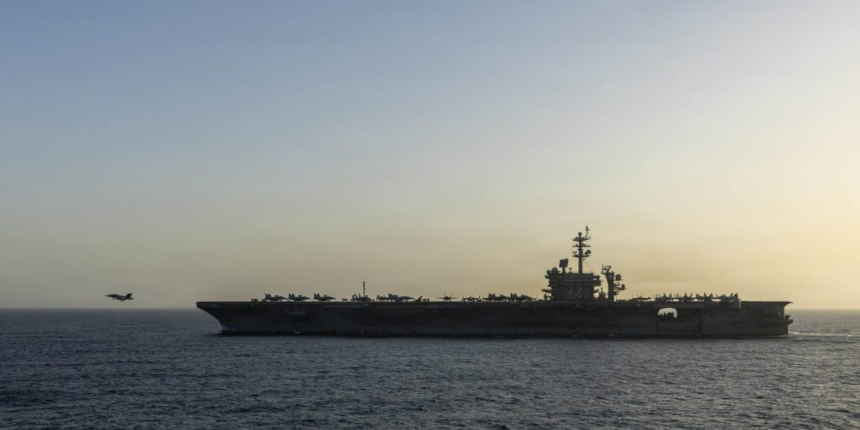
The IRGC warned that the U.S. naval blockade on Iran would prevent the strait from reopening. On Friday, Trump insisted the blockade would continue until a deal is reached.
Adm. Brad Cooper, the head of Central Command, told reporters Friday that the blockade can be sustained “as long as necessary,” adding that no ships have been able to evade it and that U.S. forces have also been removing mines from the Gulf.
Meanwhile, Lloyd’s List Intelligence said at least five Iran-linked tankers heading to Malaysia have changed course since the U.S. Navy tightened its interdiction operation to include ships carrying Iranian oil around the world.
With the U.S. targeting Iran’s oil revenue via a naval blockade, the economy as well as the IRGC’s source of funds will come under more strain.
On Saturday, ships in the Persian Gulf reported coming under attack from projectiles and small fast-attack boats, which the IRGC is known to use.
But Iran’s military leadership also signaled diplomacy is still ongoing, with state television saying the Supreme National Security Council is discussing new U.S. proposals for a peace deal.
Gregory Brew, a senior analyst covering oil and Iran for the Eurasia Group, downplayed the disagreement within the regime, though Trump’s rush to declare Hormuz open made matters worse.