It’s a great time to be in the skilled trades.
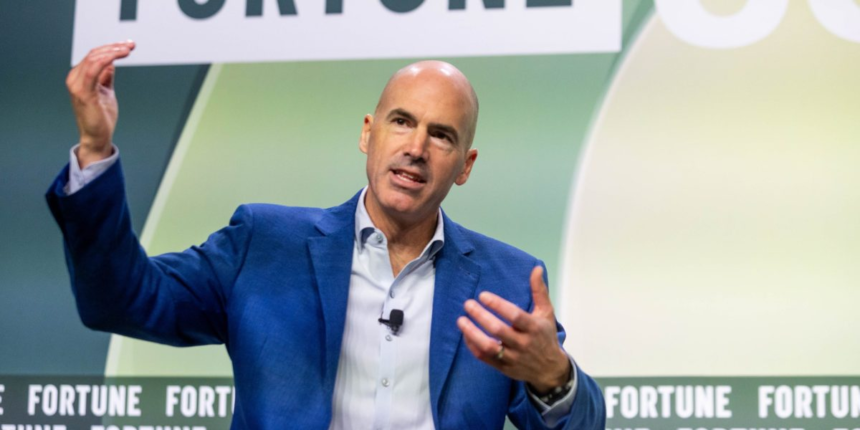
“There’s no doubt there’s a skilled trade shortage now,” he said at Fortune’s COO Summit in Scottsdale, Arizona on Tuesday.
He speaks from experience. Early in his career, Peyovich worked as a carpenter before eventually moving into corporate leadership, drawn—by his own admission—to higher pay. But now, he’s become an advocate for rebuilding the skilled trades pipeline at a time when interest in the field has lagged behind demand.
Filling those roles, however, has proved easier said than done. Peyovich said decades of underinvestment in hands-on careers—and the steady decline of early exposure to manual work—have left today’s labor pool less prepared than in previous generations.
“Filling the skilled workforce in today’s world is not like it used to be,” he said. “You don’t have people that have a lot of outside-elements exposure or working on farms that you can pull in.”
Instead, he said, employers are increasingly starting with candidates who arrive with little to no hands-on experience.
“You’re really taking—I use the joke, but it’s not really a joke because I have two college kids—the kid playing XBOX at home on his couch,” Peyovich said. “And you’re going to try to upskill them to be out in the elements, working with tools, working with customers, working in difficult situations.”
In order to attract talent, he said there’s a need to go beyond salary, and boost company benefits. New hires at Dycom Industries automatically received two weeks of vacation on the first day—something that new hires often have to accumulate.
“You’ll still need someone to turn the wrench, no doubt, but the actual process of plumbing and the value that’s added will change a little bit,” O’Donoghue said. “One of the things is the massive integration of AI into manual work—and as we start exploring things like physical AI, it makes things even more complicated.”
Peyovich echoed this view, adding that AI can be used to add value to hands-on work—like improving safety and efficiency. But overall his hope is that the current moment is not a short-lived labor-market quirk, but a longer-term rebalancing of how society values education and work.
“I still hope that in my lifetime people really see [skilled trades] as being just as an attractive track as going through college,” he said.