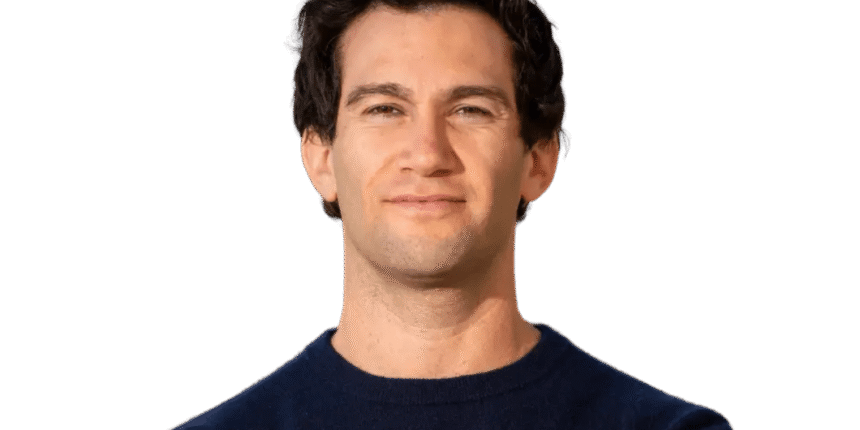
But the trick is in service of a thesis that’s backed by a business that’s grown from a $3 million run rate to north of $10 million in under two years, all without raising a dollar of venture capital.
Greenberg was quick to clarify he’s not celebrating the death of journalism. What he’s cataloguing is a structural shift in who funds it.
When those job listings go viral (which they reliably do), Greenberg said three types of people slide into his DMs. There are journalists curious about making the leap, journalists who already made it and want to evangelize, and journalists who are furious at him for making some kind of equivalence between these jobs and journalism. “To me,” he said, “it’s less important what it’s called, and more important that the work exists.” He reads all of them, engages selectively, and keeps posting.
“I pull myself back,” he said of the comment-section fights that occasionally ignite. “A good friend of mine who got into a very public spat said, ‘Roll in mud like pig, get dirty like pig.’”
Stacker became the connector. Brands pay Stacker to help produce and distribute data-driven features; Stacker runs every piece through an in-house editorial team before it touches the newswire; and several thousand news outlets — 90% of them local — pull from the feed at no cost and with no obligation. Partners include McClatchy, Lee Enterprises, Gray TV and the Local Media Consortium. Total revenue for what Greenberg calls the Stacker Connect content distribution product exceeded $5 million last year and is on pace for $10 million in 2026, according to records reviewed by Fortune. (It also makes revenue from a services/studio business and selling advertising on its site.) The company has never raised outside funding.
It’s precisely the kind of example Greenberg uses to make his case: original, data-driven stories funded by an organization with proprietary insight that no traditional newsroom had access to. Whether it could have been published without Hone’s institutional interest in the subject is a question Middleton doesn’t sidestep. “I think it’s such an interesting time. And it’s so funny because people are like, ‘Well, AI [is here] and content is changing.’ I was like, ‘Well, content has always been changing.’” Brand-journalism content, to her, “has interesting things to say and a point of view and a perspective.”
But she said her new role channels the same skills. “The instincts on how to find and frame a story don’t go away. I just found a new home for them,” she said. “Corporate storytelling, brand journalism, owned content is incredibly interesting from a strategic point of view because you’re sitting very much at the pulse of your company. You’re applying the same editorial muscle, but now the stakes are the business itself.”
Together, Middleton and Tappe represent the human face of the trend Greenberg has been cataloguing from LinkedIn. One spent 25 years in lifestyle magazines before finding freedom in a startup’s patient data. The other covered corporate finance for some of the most competitive desks in digital news before trading the rush for a seat inside the machine.
“I don’t think this can be called journalism, but simply the production of information,” Simon told Fortune. Journalism, he explained, can be understood across three dimensions—as a process, a profession, and a field—each of which involves active commitment to a set of values and standards. “A data-driven feature that provides accurate information is not ‘journalism’ from a normative point of view,” he said, “and likely would not be seen as such by most people.”
That doesn’t mean brand-funded content can’t meet journalistic standards. Simon allows that it can—if the funding is clearly labeled, the author identified, and the provenance of the information transparent. But a core expectation of journalism, he argues, is independence: “not being subject to other influences that could ‘corrupt’ journalism’s ability to say things as they are and speak the truth, including to power.”
Greenberg disputed that this distinction is as clean as Simon suggests. “I don’t think that charging for your content as a more traditional journalism business prohibits you from having a bias,” he said. He claimed that one friend who left a major publication to become brand journalists doubled their salary and later reflected that the institutional bias at the old outlet was just as real, but less visible. Other times, when journalists go to “the dark side,” he’s heard that “sometimes it’s a really shitty experience, because it turns out that you are a marketer.” For many brand journalists these days, that is just not true, he said.
From the PR side of the table, Klein had a front-row seat to the give and take behind the church-and-state ideal that journalists claim they treat as foundational. What’s changed, in her view, isn’t the presence of outside interests in the information ecosystem. It’s the transparency of the transaction. The old model obscured the relationship between advertiser and editorial. The new model — Stacker, brand journalism, creator newsletters—makes it more legible, even if imperfectly.
Now, she spends part of her time advising major companies on how to pitch Substack reporters the same way they’d pitch the Times — with the same embargo discipline, the same exclusive consideration, the same respect for the journalist’s audience. “Everyone’s a publisher,” she said, and outlets like the Journal and Fortune are competing against Substackers who are not (all) bound by the same conventions before getting their hot takes off. We are swimming in content, she said.
“The speed of creator journalism is killing,” Klein said, relating a complaint from a reporter friend of hers. “She’s got to fact check it three times before she publishes … but she’s gonna be behind me or someone who might be like, ‘Oh my God, I heard XYZ was happening.’” In this landscape, “everyone’s got a platform” and some people are building massive communities, she said. Her belief is that all the different types of content “need to coexist.”
Klein’s description of Stacker’s value to brand clients is, in this context, both a validation of the model and its most pointed accidental critique. “It’ll look like real coverage,” she said. “You’re gonna be everywhere. You’re gonna show up in LLMs.” She said critics could frame it as “pay for play”—a new form of paid media that emerged because the old arbitrage economics of digital advertising stopped working and brands needed another way through.
Middleton argued that the world of magazines, from her perspective, was not many miles removed. “Hasn’t that always been the case?” A scan of who owns most of the legacy media outlets, including Fortune, shows various commercial interests on the masthead. “We always had this very noble church-and-state divide in journalism that everyone always talked about,” Middleton said, “and I think that shifted over the years, and if it’s not dead already, those lines are certainly blurred more than it used to be,” but it has never been a black-and-white divide, in her experience.
Simon’s response is not that traditional journalism was ever bias-free. It’s that structural independence—however imperfect—is the mechanism that makes accountability journalism possible at all. “Commercial success in the last century helped enable the development of news media with a degree of autonomy and independence,” he said, “which allowed them to hold public power to account and provide independent coverage of events, including writing stories and providing coverage that looks at things others might not want looked at.”
The funny thing, Klein disclosed, is that she has caught the journalism bug. “This is probably the most fun I’ve had in my entire career. Like I am loving it,” she said, before adding the eternal reporter’s complaint: “I mean, I’d like to make a little bit more money.”
The disclosure question cuts to the heart of the model. Stacker says it always discloses to readers that a piece was produced or funded by a brand, but that standard may not always be present throughout the industry. Simon calls that “problematic” without qualification. “Transparency about the production and the sourcing is inherent in the ethics of journalism and also expected by many audiences,” he said. “This is the same reason why news organizations disclose when something came from a news agency or when something is branded content—and also why these organizations get punished if they fail to do so.” Simon concluded that brand-funded content “erodes trust when it blurs roles,” especially when it “looks, feels, travels, and is promoted like ordinary journalism.”
And then there’s the question: who reports the bad news? If brands are a major part of the storytelling environment, then how much of the increasing amount of content in the ecosystem will be an implicit brand narrative? “I don’t have a good answer for the bad news,” Klein said when asked about the stories that brand-funded outlets are built never to tell. “That is definitely just how the back-end LLM swirl is happening.”
Still, Middleton has a point that some worthy stories are being told because of the growing brand-journalism space, that wouldn’t exist otherwise.
Simon described the current moment with a phrase that cuts closer to the truth than either the boosters or the skeptics usually manage: “an exciting but slightly worrying time.” Exciting, he said, because “it creates new opportunities and new possibilities,” referencing all the worthwhile proprietary data, unique audience insights and stories that a deep-pocketed brand backer can support the telling of. What’s worrying to him is that abundance can masquerade as sufficiency. “It could lead you to a situation where people think, ‘we already have what we need’—and I wouldn’t say that’s true. We will need critical reporting.”
“You will need some infrastructure for that,” Simon said. The critical reporting function — the kind that looks at things powerful people would rather leave un-investigated—requires an organizational structure built explicitly to pursue it, without a financial relationship that constrains what it can say. That kind of work doesn’t have to come from legacy outlets, Simon noted, pointing to investigative nonprofits like Bellingcat and ProPublica as proof that the function can survive outside traditional business models. But it has to come from somewhere. And what Stacker and its clients are building, by their own candid admission, is explicitly not that.
Greenberg was careful not to overstate what he’s built. “For the news outlets, we are a really nice-to-have. We’re not a need-to-have.” It is an honest assessment of the wiring beneath the surface—genuinely useful, hard to replicate, and inherently incapable of the work that requires biting the hand that feeds.
“Content has always been changing,” Middleton said. “The amount of pivots that I’ve seen over the years of doing this, like this is just the next one.” The history of journalism bears her out: the cocaine budgets and interest-free loans from the glory days of magazines were underwritten by advertisers with their own interests; the church-and-state divide was always more aspirational than absolute; and the question of who funds the story has never had a clean answer.
What’s new is the scale, the sophistication and the infrastructure routing it through newsrooms that may not tell you where it came from. You’ll read more. You’ll understand more context. You’ll get more proprietary data turned into readable features than any previous generation of news consumer. And it will be funded by more parties than perhaps ever before.
[This report has been updated to clarify that Stacker always discloses the brand backing for content that it distributes and to correct that Anneken Tappe was at Marketwatch, not Axios.]