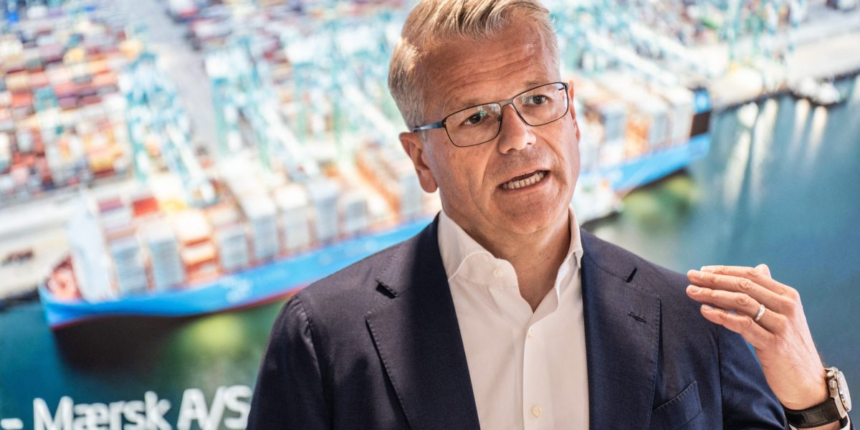
A prolonged war in Iran will bump the odds of inflation while simultaneously forcing a slowdown in consumer demand. All of this is troubling for the chief executive of container shipping giant Maersk, who warned that deadly combination is already rocking the global shipping sector.
Maersk is at the forefront of the oil shock, deeply entwined with fuel costs and global logistics, making it a harbinger of what is to come in how the world navigates widespread energy disruptions.
Clerc explained increased energy expenses have cost the company an extra $500 million per month, and while Maersk has strategies to reduce costs, its consumers—from small businesses to multinational conglomerates—will have to take on some of the burden of the increases.
“And there is so much we can do on reducing costs, but there is a lot we need to do on passing on these costs to customers, because it’s such a massive cost increase that we can’t shoulder it,” he said.
Clerc expressed concern that ongoing pressures on consumers would increase the likelihood of demand destruction, meaning a long-lasting decline in demand for a certain product because of supply constraints. A broader slowdown could threaten total container volumes for the entire shipping sector.
“As some of these costs made their way all the way up to the end consumer, will we see demand destruction at the consumer level, and will that then reverberate throughout the supply chain, with softer demand in the second part of the year?” Clerc asked. “That is certainly something that we’re looking out for very, very closely, because it would certainly change the equation on how this crisis is going to impact the global supply chain and our industry, in particular.”
Though Clerc’s demand destruction anxieties are reflected in early data, Ryan Kellogg, an energy and environmental economist and public policy professor at the University of Chicago, said it remains to be seen if the global oil sector will see demand destruction, which is usually a long-term headwind.
“It’s very arguable that we have entered a new era in which oil supply from the Persian Gulf region is not as consistent, as reliable as we once thought it would be, and it makes sense to diversify away from that,” he said. “There’s some ability to adapt. It comes at a cost, though.”