Iran’s regime has so far withstood U.S. and Israeli bombardment, but the economic forces that sparked the most serious conflict in decades have only gotten more severe.
Spiraling inflation and a collapsing currency set off mass protests in late December and early January, prompting a brutal crackdown that is estimated to have left tens of thousands dead.
Given the Iranian regime’s willingness to massacre its own people, analysts have said Tehran has a higher tolerance for economic pain than the U.S., which is trying to clinch a favorable peace deal with a naval blockade that’s choking off oil exports.
Still, the pain is excruciating, and now, even the regime is acknowledging it.
An official in Iran’s labor and social affairs ministry said the war has put a million people out of work, as top employers in the oil and manufacturing sectors have suffered damage.
Iran’s parliament speaker and top negotiator, Mohammad Bagher Ghalibaf, warned Wednesday that the U.S. blockade represented a “new phase” of war.
“The enemy has pinned great hope on economic pressure,” he said.
The government has urged Iranians to limit consumption of water, electricity and gas, while authorities in the capital called on residents use public transportation instead of their cars. Iran’s steel industry encouraged companies to ration their use of steel sheets.
Prior to that, food inflation had soared to an annual rate of 64% in October, then accelerated further to 105% by February, vaulting overall inflation to 47.5% on the eve of war.
Meanwhile, prosecutors in Tehran have vowed to sentence price-gougers and hoarders of staple goods to 20 years of prison and flogging, according to state-affiliated media.
The Iranian government has hiked wages, distributed cash to the poor, and issued coupons for staples like rice, chicken, and cooking oil.
Another Iranian official said the country “will face a disaster” if sanctions aren’t lifted as the biggest industrial plants that power the economy will take months or years to repair, according to Reuters.
At the same time, Iran’s currency sank to a fresh all-time low against the U.S. dollar of 1.8 million rial on Wednesday, stoking more panic over declining purchasing power.
While hopes are high that the U.S. and Iran are close to a lasting peace deal, the arduous task of rebuilding will take years.
State media estimated reconstruction could cost of around $270 billion, or nearly 80% of Iran’s entire GDP of $341 billion.
The regime also may not be able to rely on neighbors like the United Arab Emirates to facilitate oil trades and provide Iranians with capital after the war officially ends.
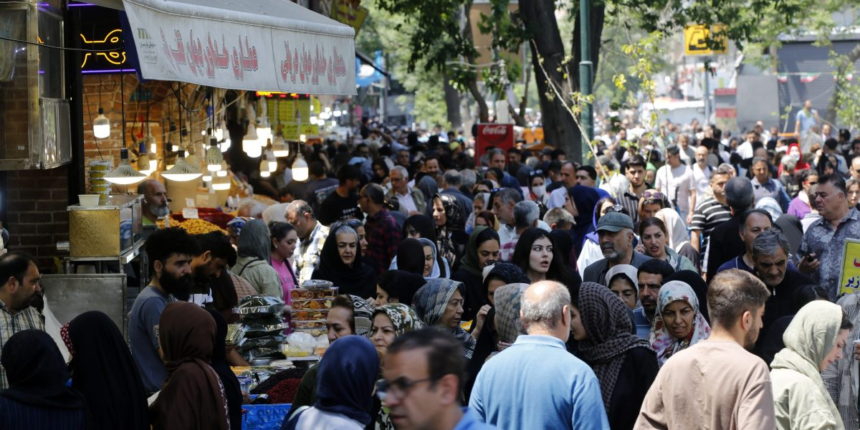
For now, some Iranians have taken to doom-spending with the economic outlook getting increasingly grim.
“Now those things are out of reach for a large portion of society,” Melika said. “So they say, ‘Why should we be hard on ourselves? Let’s at least have a nice meal.’”