Beginning with 2-year Treasuries, the notes spiked overnight Thursday to more than 4%, their highest for the year-to-date. 2-year Treasuries are generally seen as the temperature check for the market’s rate expectations over the next couple of years, and tend to be relatively in sync as a result. If the two became untethered, it could be inferred that the bond market is signaling the Fed isn’t doing enough to cool the economy, and will need to pump the brakes.
While Warsh, a former Fed governor, might be betting big on AI and its promised productivity gains as a reason for cutting down the line, it seems investors are only expecting the trajectory to be upward in the first few years of his tenure.
The news in the past 24 hours also hasn’t done much to alleviate concerns that sticky inflation will cool anytime soon. Remember that the latest consumer price inflation (CPI) report came in at 3.8%—well above the Fed’s 2% target, first introduced by Warsh’s mentor, former Fed Chairman Ben Bernanke.
The Strait is actually more of an issue for China than it is for the U.S., which is a net energy exporter. China, on the other hand, is the single largest buyer of Iranian oil.
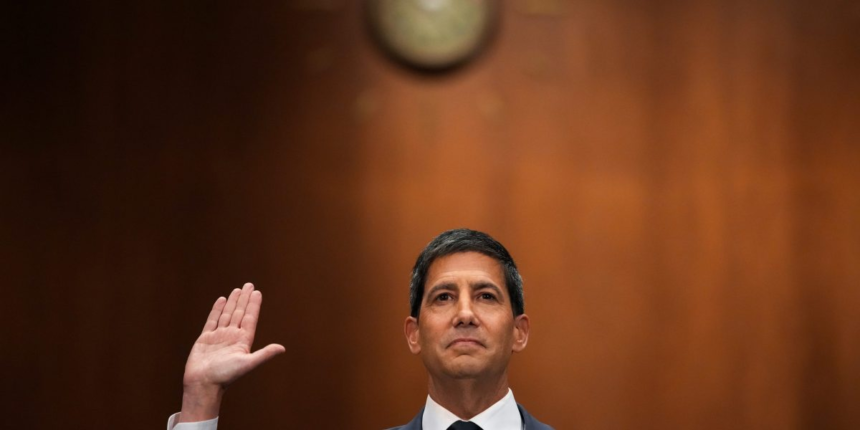
With data, and now the markets, both seemingly moving to bet against the rate cut that President Trump has been angling so persistently for since returning to the Oval Office, Warsh’s dovish inclination will be tested.
Of note is the fact that Treasury yields across many time frames have spiked in realtion to fears about inflation: 30-year Treasuries are up over 5%, as are 20-year yields.
For both to jump is an effective tightening of conditions in the longer term, far outweighing any pinch to the base rate the Federal Open Market Committee (FOMC) might agree on. This may be a justification Warsh—or indeed any other dovishly inclined voters—leans on: If longer-term rates are tightening due to macroeconomic conditions, then they could be offset by some easing in the short term.
“The recent rise in market-based breakeven inflation rates strongly implies that Warsh and the FOMC will have to prepare for the chance that inflation will continue to rise and that the Fed will have to shift its policy,” noted Joseph Brusuelas, chief economist at RSM, in a release shared with Fortune last night. “In his confirmation hearing, Warsh testified that ‘inflation is a choice.’ He may get the chance to prove he actually believes it.”