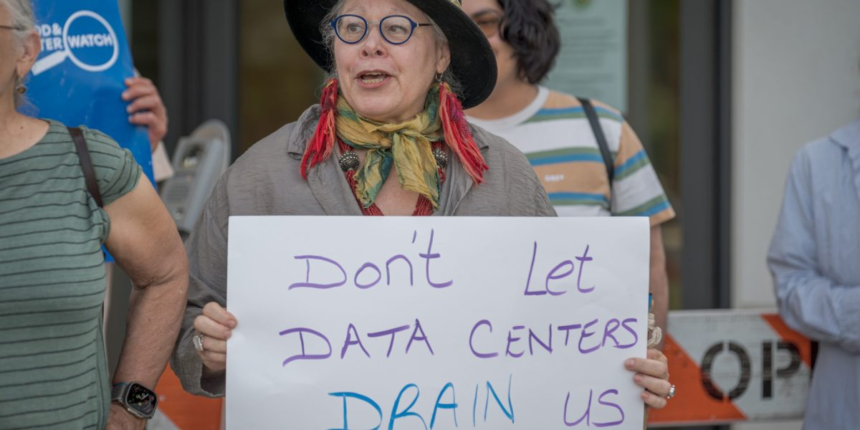
Earlier this year, Natelli Investments, a large-scale development firm, withdrew its annexation and rezoning applications for a proposed data center in Wake County, NC. The campus was projected to be about 190 acres, with six buildings all about 70-feet tall. The developer cited zoning ordinance changes that pushed back the construction of the proposed 250-megawatt facility, but the scrapped plans also followed community protests, petitions, and participation in public meetings over concerns about the data center’s water use, air quality impacts, and increased costs.
Stories about cancelled or postponed data center projects are only becoming more commonplace, and new research shows just how pervasive the opposite to AI infrastructure expansion has become.
“Opposition to data centers—it’s now part of a mainstream conversation,” Miquel Vila, lead researcher at Data Center Watch, told Fortune. “It’s not anymore only the communities, not only anymore the neighbors that are being affected by a specific project. Now, this is part of the general narrative, general discourse, of American politics.”
“In some cases,” the report said, “opposition mobilized before any project was officially filed, the mere rumor of a data center was enough to trigger organized resistance.”
Greater data center development in rural America has also changed the demographics opposing the projects. While Heatmap Pro found AI infrastructure growth was most unpopular among Democrats and young people, it saw a decrease in popularity among all Americans. In states like South Carolina, South Dakota, and Michigan, proposed data centers are a bipartisan or a Republican issue.
“If you scale the situation to a more ideological level, you have arguments on both the right and the left against AI, against data centers,” Vila said.
These hindrances are not expected to halt all data center construction, but Vila suggested that as the process to pass proposals and break ground on these projects matures, so, too, will efforts to oppose it. Those efforts may look less like protests at town halls and more like hiring lawyers to go toe-to-toe with developers.
“We might see more of these fights escalate to a more legal front,” he said.