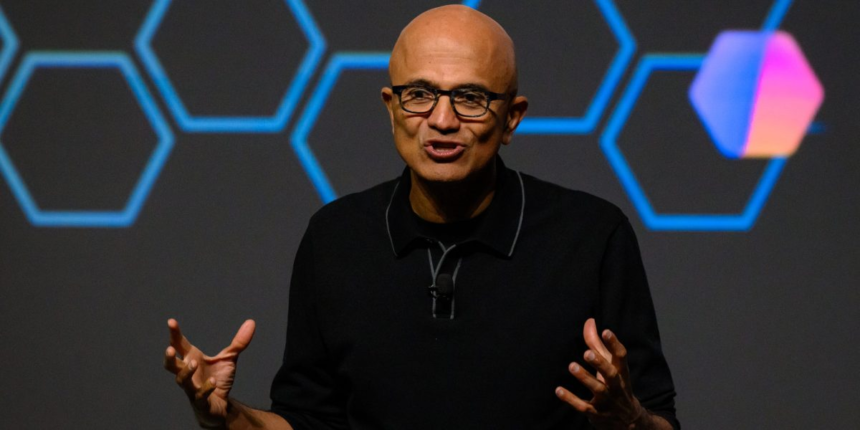
As Nadella kicked off the company’s conference on Tuesday, the CEO delivered a message designed to show the strength and breadth of Microsoft’s AI initiatives, and to re-ignite some of the buzz the company had at the onset of the AI revolution just a few years ago. Even the choice to hold the Build event in San Francisco for the first time since 2016 seemed designed to send a message.
If there was one unifying theme to the sweep of product announcements and partnerships made by company executives, it’s that Microsoft’s portfolio of technology—from AI models to devices to chips—anchors it at the center of the AI industry.
“It’s a new paradigm,” Nadella said of the agentic era. Agents “reason continuously. They generate and run code dynamically. They take actions across files and devices, as well as across the network.”
Nadella announced “Project Solara,” which the company pitched as a purpose-built agentic platform for devices that could include a desktop device and badge that people may wear to interact with their agents.
Microsoft is aggressively fortifying its weak spots. It has more recently given greater priority to train Copilot on its servers, is deploying homegrown chips, and has a new deal with OpenAI that provides it and its longtime partner greater flexibility to compete.
Nadella in his keynote said Microsoft, and the technology industry, are transitioning from a cloud-native era to an “agent-native stack” he explained as agents executing tasks in both software and hardware environments.
“There are really two stories people can tell about this moment,” he said. “One is that technology concentrates power, reduces human agency, and leaves the society to absorb the consequences. The other is that we use this next wave to unlock opportunity for developers, scientists, enterprises, and every community.
Our job is to make the second story true.”