The site has an interesting, quite populist framing. “Private equity is already circling the wreckage,” it reads. “The passengers, the workers, and the communities Spirit served can take it back. Like the Green Bay Packers. Like WinCo Foods. Like us.” The minimum pledge is $45, roughly the cost of a one-way Spirit ticket, the site claims. Every member would get one vote, the site says, and the profits would be distributed proportionally.
The pitch is fighting a nonexistent villain. Private equity isn’t involved with Spirit’s downfall. No one—not Frontier, which tried twice to merge with it, and neither the Trump administration nor any venture fund—wanted to buy the airline at the price its creditors needed. Spirit’s CEO cheekily told CNBC on Monday that “we just kind of ran out of runway.”
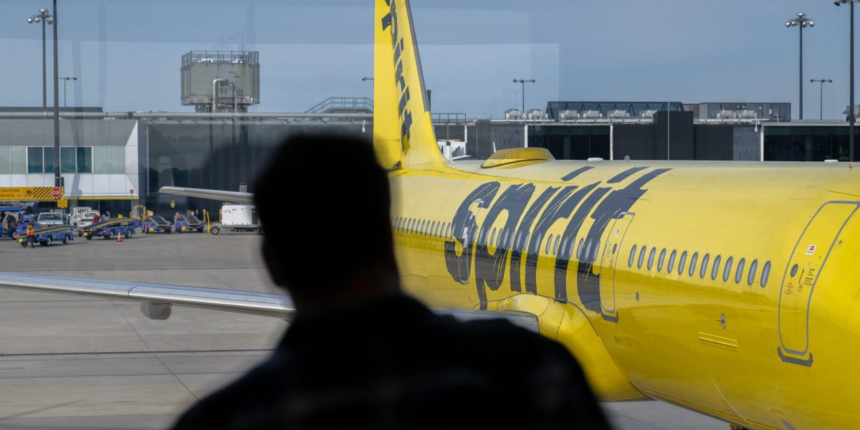
Spirit is dissolving, and it told the bankruptcy court this week it doesn’t even have enough cash to host an organized auction of its own aircraft and engines. Instead it’s opting to let the lenders take back the planes.
That’s the part Peterson’s pitch is, in its own scrambled way, trying to get at. The four largest U.S. airlines now control roughly 80% of domestic capacity. Spirit, even at its diminished end-state, was still the eighth-largest carrier in the country. Its disappearance is the latest in a long history of consolidations—Northwest into Delta, US Airways into American, Continental into United, Virgin America into Alaska—that have left Americans with fewer choices for flights, and higher prices for those. Spirit’s own CEO, Dave Davis, told CNBC on Monday that more consolidation is “what the lower end of the industry needs.”