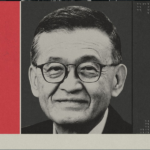
Put simply, Trainer brands SpaceX projected valuation of $1.75 trillion market cap, biggest by far for any post-offering number of all-time, as “truly out of this world,” and instructs folks and fund to stay away from an investment that the basic math stamps as beyond lousy.
Trainer argues that the SpaceX S-1 registration statement exposes a litany of weaknesses. Here are four of central issues he identified in a recent critique titled “Going Boldly Where No One Has Gone Before,” a surprisingly mild-sounding headline that, once you read the report, might better read “going recklessly.”
Trainer argues correctly that the investors who are expected to buy $80 billion in SpaceX shares in the IPO will get exert zero influence over how the enterprise is run. Instead, Elon Musk will hold all the power. The rules are so one-sided that a group of America’s largest pension funds, including CalPERS, and those headed by the Controllers of both New York State and City, filed a lengthy letter objecting to half-a-dozen of the provisions. As Joseph Lucoski, founder and managing partner of Lucoski, Brookman, LLP., told Fortune, “I practice every day with the exchanges and regulators, and they would never accept this onerous and one-sided a structure for an emerging growth company. Normally, you’d see a lot of pushback. But because it’s Musk, and the biggest IPO ever, and that everyone’s vying to get a part of it, the exchanges are going along with it. It would never happen in my world.”
SpaceX has issued two classes of shares, the A category sold at the IPO that gets ten votes, and the B batch entitled to just one. Musk owns around 42% of the total equity, but Musk exerts 85% control courtesy of his overwhelming ownership of the B’s. That position enables Musk alone to name all board members and executives. Musk can’t be removed from the CEO role unless he voluntarily departs. To make matters worse, the extent of private ownership qualifies SpaceX as a “control” corporation that’s exempted from naming an independent board, and non-affiliated directors on comp and audit committees. Plus, its bylaws require that all shareholder claims be resolved via binding arbitration. Attorney Adam Moskowitz, who’s won billion in class action suits against corporations, warns that the system once again strips rights from investors. As Moskowitz told this writer, The statistics show that mandatory arbitration cases are settled overwhelming in favor of the company. It’s a rigged fight for the shareholders, as if the company were paying the refs in a football game.”
The S-1 summarizes the shareholders’ plight as follows: “Mr. Musk will have the power to control the outcome of matters requiring shareholder approval.”
Hence, SpaceX will have less than $18 billion left over for capex and other growth initiatives. And its capex from AI alone hit almost $8 billion in Q1, and as the S-1 states, will ramp fast from there. The other two franchises, connectivity and rockets, generate by my estimate only around $1 billion a year in free cash flow combined. So retiring those big debts means that SpaceX will run through the IPO funds fast, and need to borrow or float more stock to fund the big deficit between what its operations are earning, and the gigantic investment needed to build out data centers. The upshot: Bigger interest payments that will hit profits, and far more shares, A’s not B’s by the way, that will dilute the folks and funds so anxious to buy on day one.
The lack of current profitability point back to the Big Capex problem. In the S-1, SpaceX brags that it’s targeting the biggest Total Addressable Market in world history at $26.5 trillion. But Trainer notes that “Big TAMs mean big competition.” The issue circles back to the gigantic investment needed to mine that rich lode when the top names in tech are digging as well. As Trainer puts it, “The AI race is draining cash from some of the largest companies in the market. In order to compete with the hyperscalers, SpaceX will have to spend like the hyperscalers. SpaceX could find itself falling farther behind or diluting investors with additional capital raises in short time.”
Trainer’s a master of deploying discounted cash flow analysis to determine how much companies now boasting big valuations must earn going forward to reward shareholders. He avows to never seeing any mountain as steep as the challenge at SpaceX. By his calculation, the bogey for success, starting at the expected $1.75 trillion market cap, is $1.1 trillion in revenues and $248 billion in net profits.
Today, the enterprise posting the largest sales in the S&P is Amazon at $743 billion over the past four quarters. The biggest earner: Alphabet at $160 billion. SpaceX would have to beat both by around 50%. Trainer concludes that even if you’re willing to relinquish all your power as a shareholder, put up with the likes of mandatory arbitration, and it doesn’t bother you that most of what you pay for the shares goes to slashing debt, think about the feats needed to achieve numbers never before seen. Starting from below zero. The simple math shows that the climb’s virtually impossible. That alone is plenty of reason to stay away.