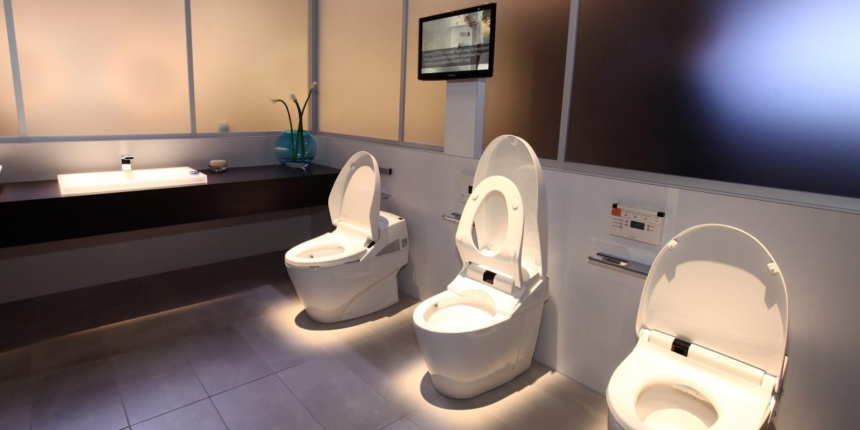
Whenever someone visits Japan, they mention the sights, the food, the impeccable transportation. Oftentimes, they mention futuristic toilets: the ubiquity of bidets, their sound effects, and the turbo-powered jets that keep you clean.
Now Japan’s largest bidet maker, Toto, is doubling down on AI chips.
The announcement followed Allbirds’ pivot to become a chipmaker. But unlike the one-time shoe company’s switch from comfort to compute, Toto didn’t just flush its old business to make chips: it’s been making the same components to power the world’s AI infrastructure for years.
It raised $50 million to buy GPUs, declared itself a “fully integrated GPU-as-a-Service provider,” asked shareholders to strip out its founding environmental mission, and surged 582% in a single session. Retail investors set a single-day purchase record, but saw the stock to drop over 20% the next day.
Toto also has an advanced ceramics division that manufactures electrostatic chucks, which are precision components that hold silicon wafers in place during memory chip fabrication. That division delivered ¥28.9 billion ($181 million) in operating profit—now more than half the company’s total.
And unlike Allbirds, Toto isn’t rebranding itself: it’s been building chip components for 40 years.
A disproportionate number of these “monopolies” are from Japan. While Japan has done a lot over the past decade to improve shareholder value, it’s still not an easy market for foreign investors, and there are real worries it’s about to backslide.