It’s all-knowing, omnipresent, and somewhere between one to two billion people in the world subscribe to it.
The commission marks the first time the Catholic Church has formally coordinated its AI engagement under a single body, and arrives as governments worldwide remain divided on how, or whether, to regulate the technology.
Cardinal Michael Czerny, the prefect of the Dicastery for Promoting Integral Human Development, said the commission would help the Roman Curia “address the challenges of artificial intelligence both internally and for the whole Church, and the whole world.”
Leo has drawn a deliberate parallel between the forthcoming document and Rerum Novarum, the 1891 encyclical by Pope Leo XIII (the namesake he cited when choosing his papal name) that addressed labor rights during the Industrial Revolution. Shortly after his election in May 2025, he said: “In our own day, the Church offers to everyone the treasury of her social teaching in response to another industrial revolution and to developments in the field of artificial intelligence.”
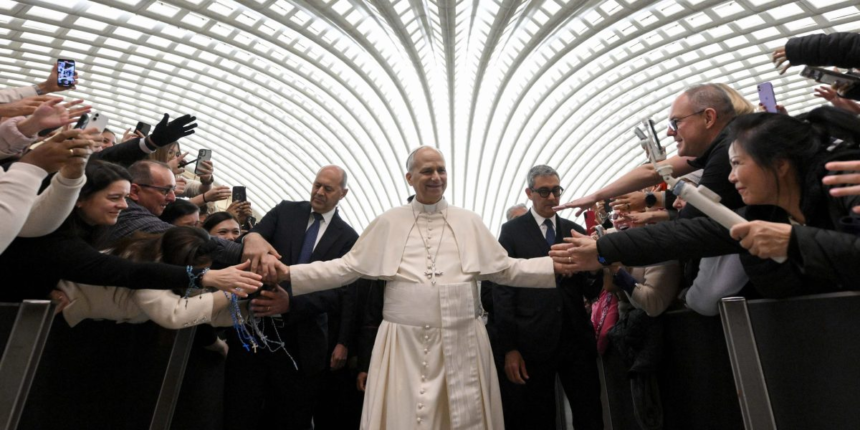
Leo XIV, born Robert Francis Prevost and the first American pope, studied mathematics before entering the priesthood. In his first address to cardinals in May 2025, he identified AI as a central challenge of his papacy and called it a threat to “human dignity, justice, and labor.”
In that sense, Leo’s new commission is less a regulator than an attempt to give the Church a more organized voice in a global debate it has already been shaping through repeated warnings about AI’s impact on workers, children, and human dignity.