Iran said transit through the critical Strait of Hormuz will flow once the conflict with the US and Israel is over, but the sides are no closer to resolving their differences or finding a path to achieve it.
President Donald Trump returned from a two-day summit with Iran’s close ally, China’s Xi Jinping, where both agreed the strait should be open but made no apparent progress toward that goal.
Iran has shown little interest in loosening its hold on the waterway, insisting it wants to maintain a degree of control even after the end of the war. Iran’s threats on ships in the Persian Gulf have brought exports from the oil-rich region to a near-standstill, sending energy prices soaring and giving Tehran significant leverage in talks with the US.
“Naturally, once the current state of insecurity is resolved, navigation conditions in the Strait of Hormuz will return to normal,” Iranian President Masoud Pezeshkian was cited as saying by the semi-official Mehr news agency.
Iran will implement effective and professional monitoring and control mechanisms in the Strait of Hormuz within the framework of international law, Pezeshkian said without elaborating. He added Iran remains committed to a diplomatic resolution to the conflict.
Chinese Foreign Minister Wang Yi said Friday that the strait should be opened to shipping as soon as possible, according to state-run Xinhua News Agency. In response to Iran’s disruption of shipping movements, the US imposed a blockade on the Islamic Republic’s oil exports, in an effort to sever its economic lifeline and persuade its officials to agree to US terms for a peace deal.
The statement from China came as the world’s two largest economies sought to emphasize points of agreement on the Middle East conflict during Trump’s meetings with President Xi Jinping this week — even as they’re essentially on opposite sides, with China repeatedly criticizing the US-Israeli attack on its Iranian ally.
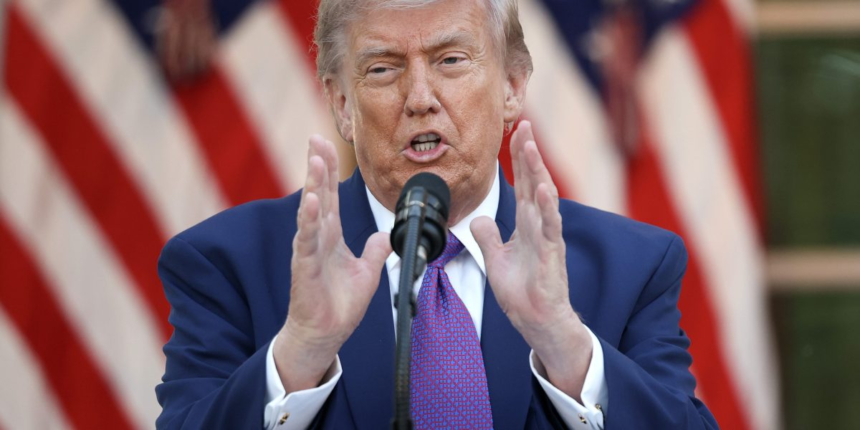
“I’m going to make a decision over the next few days,” Trump said aboard Air Force One when asked if he’d consider lifting the sanctions. “We did talk about that.”
Physical crude markets have also firmed again in recent days, offering a reminder of the wider supply tightness that’s hitting the global oil industry.
Brent crude has jumped about 50% since the start of the war, with traders fearing a fresh escalation in hostilities between the US and Iran after Trump’s visit to China failed to yield any concrete progress on a plan to restart the Strait of Hormuz.
Pakistan’s Interior Minister Mohsin Naqvi arrived in Tehran on Saturday, where he met his Iranian counterpart. The two discussed bilateral relations and the prospects for resuming US-Iran peace negotiations, for which Pakistan has been the main mediator, the semi-official Tasnim news agency reported.
A modest recovery in vessel movements seen earlier this week has faded as owners remained cautious.
The only real prospect of a short-term deal appears to be putting off talks about Tehran’s stockpile of highly enriched uranium, with both sides suggesting that issue be dealt with later — despite Trump citing Iran’s nuclear program as the main justification for the war.
Iran said it had “come to the conclusion with the Americans” to postpone the topic until the later stages of negotiations, calling it “very complicated,” Foreign Minister Abbas Araghchi said at a press conference in India on Friday.
Iran’s highly enriched uranium, which has been in an unknown location since a US and Israeli bombing campaign in June last year, remains one of many obstacles to a peace agreement.