The doomsday crowd may want to check its history books.
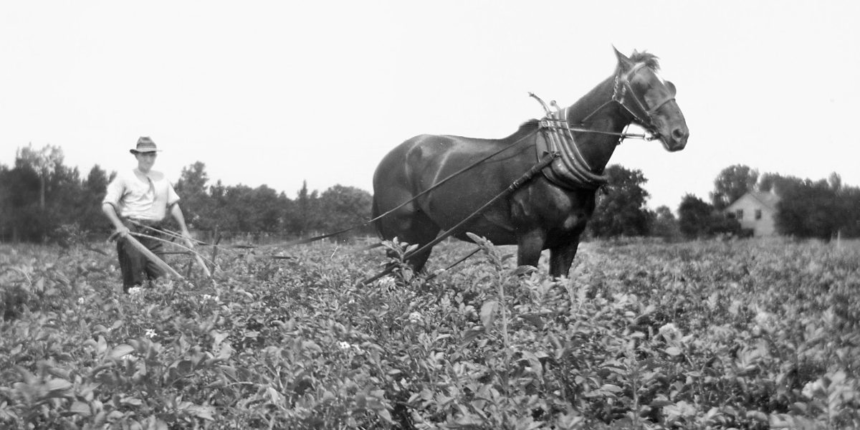
The bank’s central argument is simple: 60% of the jobs that exist in the United States today didn’t exist in 1940. Data scientists, social media managers, and cloud developers “barely existed 20 years ago but are now mainstream jobs.” Agriculture, which employed roughly 40% of Americans in the early 1900s, now accounts for just 1% of U.S. employment.
“Adaptability is the new job security,” the report concludes.
But BofA drew a sharp distinction between exposure and elimination. According to International Labor Organization data cited in the report, 13% of global jobs sit in the “augmentation” category—meaning AI will enhance, not replace, those workers—versus just 2.3% with genuine automation potential.
“GenAI will primarily augment rather than replace workers,” the bank writes, with professional and financial services standing to benefit most and repetitive roles in customer service, information/communications technology, and administration facing the highest substitution risk.
BofA leans heavily on a favorite economist’s parable: the ATM. When automated teller machines proliferated in the 1970s and ’80s, conventional wisdom held that bank tellers were finished. Instead, lower operating costs allowed banks to open more branches, and tellers were redeployed into sales and customer service. The result was increased total teller employment.
Then there’s the Jevons paradox. Writing in the 1860s, economist William Stanley Jevons observed that making steam engines more fuel-efficient didn’t reduce coal consumption—it caused coal consumption to explode, because cheaper energy unlocked entirely new industrial demand.
Nobel laureate economist Daron Acemoglu’s work offers the starkest warning: Unless AI generates new labor-intensive tasks at scale, its productivity gains will naturally flow to capital owners rather than workers, widening the gap between those who own the machines and those who once operated them.
BofA said AI will increase pressure on governments to provide wage insurance, enhanced unemployment benefits, reskilling incentives, and tax reform to ensure the gains from AI don’t concentrate in too few hands.
“Policymakers will need to design transition frameworks that cushion short-term disruption, while preventing labor-market scarring, especially for mid-career workers with skills at risk of obsolescence,” it added.
OpenAI warned that as AI automates more work, the wage and payroll tax revenue that funds Social Security, Medicaid, SNAP, and housing assistance could collapse, making capital-based taxation not just equitable, but fiscally necessary. Both Khosla and OpenAI agree that the American tax code was designed for an economy where human labor generated most of the value. That economy is rapidly vanishing.
Whether the jobs come back, and for whom, is ultimately a question BofA conceded it cannot fully answer. History says the jobs will return. The question is whether they’ll arrive fast enough to matter, and whether agentic AI turns out to be an ATM or an iPhone.