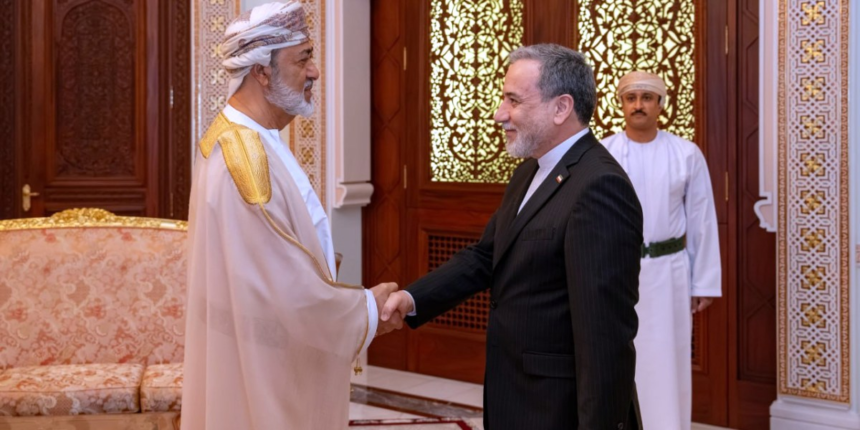
The White House on Friday said it would dispatch envoys Steve Witkoff and Jared Kushner to Islamabad for a second round of talks. But shortly after Araghchi’s departure was reported, President Donald Trump said he had called off the mission because of a lack of progress with Iran. “They can call us anytime they want,” he said.
The official, who is involved in mediation efforts, said Iran insists on ending the U.S. blockade before a new round of talks and that Pakistan-led mediators are trying to bridge significant gaps between the countries.
He added that Araghchi’s talks in Oman have focused on issues surrounding Strait of Hormuz.
Oman’s response wasn’t immediately clear. Araghchi also spoke by phone with counterparts in Qatar and Saudi Arabia on Sunday.
Even before Saturday’s developments, Iran’s foreign ministry said any talks would be indirect and Pakistani officials would act as go-betweens, reflecting Tehran’s wariness after rounds of indirect talks last year and earlier this year ended with Iran being attacked by the U.S. and Israel.
Syed Mohammad Ali, an independent political analyst in Pakistan, said the delay in the talks must not be seen as a setback and that indirect talks were progressing. He said tensions between Washington and Tehran cannot be eased overnight and the negotiation process requires patience.
“But the good thing is that the ceasefire is holding, and both sides have a desire to end the conflict in a way that does not backfire at home,” Ali said.
Since the war began, at least 3,375 people have been killed in Iran and at least 2,496 people in Lebanon, where the Israel-Hezbollah fighting resumed two days after the Iran war started.
Also, 23 people have been killed in Israel and more than a dozen in Gulf Arab states. Fifteen Israeli soldiers in Lebanon, 13 U.S. service members in the region and six U.N. peacekeepers in southern Lebanon have been killed.