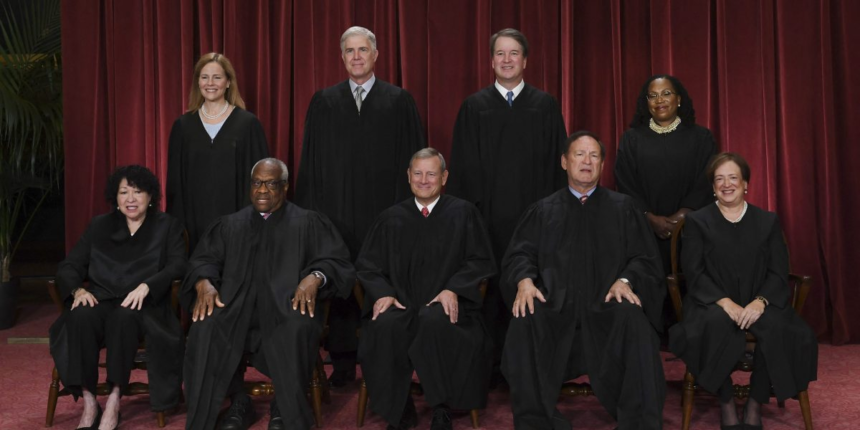
As President Donald Trump ramps up pressure on the Federal Reserve, the typically staid, consensus-driven institution could take on some qualities of the more bitterly divided Supreme Court.
Cook joined the Fed in 2022 after being tapped by President Joe Biden to fill an unexpired term that ended in 2024, then getting reappointed. So she can stay on the Fed board until 2038, though governors typically don’t serve out their entire 14-year terms.
“However, the Fed has increasingly become a political football,” Ian Katz, managing partner at Capital Alpha Partners, said in a note Wednesday. “Trump has been clear that he wants to put loyalists on the board. As a result, some governors may choose to remain on the board until a president from their same political party is in the White House — making the Fed in that way more like the Supreme Court.”
That could factor into Cook’s decision on how long she will stay. In his note, Katz observed that “governors in the past have stepped down without concern that the president would nominate a replacement who isn’t a strong believer in Fed independence.”
Treasury Secretary Scott Bessent has said Powell should step down as governor when his term as chairman ends, saying that has been the tradition. Powell has declined to say what he will do.
It’s not clear if Miran will be reappointed to the Fed board as the White House looks for someone to replace Powell as chairman. But either way, the Fed will have three Trump-appointed governors.
To be sure, that’s not enough to sway rate decisions on the 12-member Federal Open Market Committee, which is also comprised of regional Fed presidents. But if Trump is able to name a fourth governor, that’s enough to tip the balance on the seven-member board.
With composition of the Fed in flux, a more divided era may be looming that also resembles the Supreme Court.
Fed rate decisions are usually unanimous with even one dissenting vote being rare. By contrast, the high court rarely has unanimous votes, while split decisions along ideological lines are common.
July’s Fed meeting may have been a preview of what’s to come as two Trump-appointed governors voted to lower rates, going against the majority that kept rates steady.
Like the chief justice of the Supreme Court, the Fed chair represents just one vote but is also a first among equals who carried outsized influence. So whoever replaces Powell may need to rely on their powers of persuasion on a Fed with more conflicting views.