Best known as the gas that makes party balloons float, helium is also a key input in chipmaking, space rockets and medical imaging.
Here’s a deeper look at helium’s industrial role:
Helium is a byproduct of natural gas production, when it’s separated out by cryogenic distillation. Qatar, which sits on the world’s biggest single natural gas field, produces about 30% of global helium supply, according to the U.S. Geological Survey.
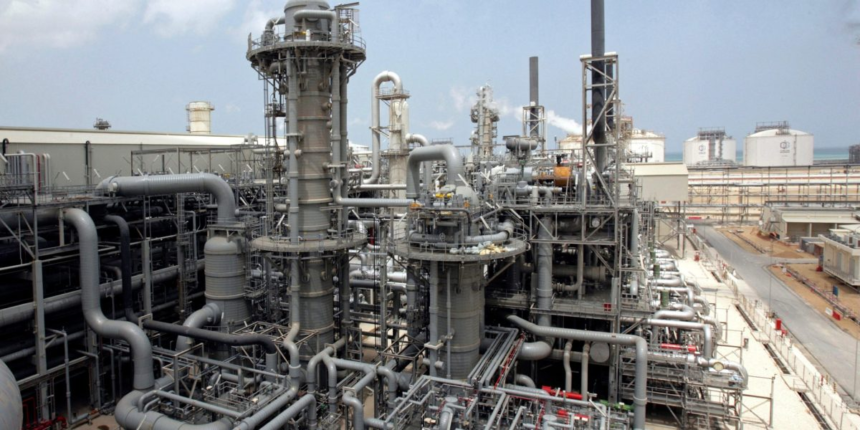
Qatar’s helium is produced at its Ras Laffan facility, the world’s largest liquefied natural gas plant. But state-owned energy company QatarGas halted production of LNG and “associated products” on March 2 because of Iran’s drone attacks and two days later declared force majeure, meaning it’s unable to supply contracted customers due to circumstances beyond its control.
After Ras Laffan was hit again by more Iranian strikes on Wednesday and Thursday, QatarGas reported “extensive” damage that will take years to repair and cut annual helium exports by 14%.
“It makes the story worse,” said Phil Kornbluth, president of Kornbluth Helium Consulting. “Your best case scenario would be you’re back producing some helium in six weeks or something like that. As it looks right now, that’s highly unlikely.”
Spot prices for helium have doubled since the crisis erupted and will probably rise further, Kornbluth said.
But spot trading only accounts for about 2% of the total market in normal times, he said. Helium is a thinly traded commodity and is mostly sold through long-term contracts.
Still, contract prices “could go up a lot,” Kornbluth said. “There’s lots of room for price increase if this is an extended outage.”
Kornbluth said the shortage hasn’t hit yet, because helium containers that would have been filled when the conflict erupted at the start of March would have still taken several weeks to arrive in Asia.
“Nobody’s run out of helium yet. But it’s a few weeks out when the shortage really hits.”
Helium is essential for manufacturing semiconductors, including the cutting-edge chips used for artificial intelligence models produced in Asian fabrication plants.
It’s great at conducting or transferring heat, making it ideal for rapid cooling.
Chipmakers use it to cool wafers — the discs of silicon printed with tiny electronic circuits. Helium is used during the etching process, when material that’s been deposited on a wafer is scraped away to form transistor structures, said Jacob Feldgoise, an analyst at Georgetown University’s Center for Security and Emerging Technology.
During the etching process, “you really want to maintain a constant temperature over the wafer. And in order to do that, you need to be able to draw heat away from the wafer that’s being processed,” said Feldgoise. “Helium is an excellent thermal conductor. And so chip fabs will blow helium over the back of the wafer in order to speed heat removal and keep heat removal consistent.”
Under current semiconductor manufacturing processes, there’s no viable replacement for helium to cool wafers, said Jong-hwan Lee, a professor of semiconductor devices at South Korea’s Sangmyung University.
The medical industry uses helium to cool superconducting magnets powering magnetic resonance imaging machines.
Helium’s atomic properties make it tricky to store and transport.
In gas form, helium’s tiny molecules can easily escape containers by leaking through even the smallest of gaps.
About 200 of these containers are stuck in the Middle East, Kornbluth said. They cost about $1 million each, so there aren’t a lot of extra ones sitting around elsewhere.
“It’s going to take a fair amount of time to get these containers out of Qatar and to get them somewhere else where they might be able to be filled with helium,” he said.
“So this initial period when you lose Qatar supply and have to rejig the supply chain and reposition containers, that’s going to be the worst part of the shortage most likely.”
There only are a handful of countries that produce helium.
The United States is the biggest producer, accounting for 81 million cubic meters last year. Qatar, Algeria and Russia are the other major producers, but Russian supplies are banned under Under States and European Union sanctions.
USGS estimates the United States has 8.5 billion cubic meters of recoverable helium in geologic reservoirs, while the rest of the world has 31.3 billion cubic meters.
Helium is among 14 semiconductor supply chain materials the Seoul government has flagged for monitoring due to their heavy vulnerability to the war.
“Even disruptions affecting just a handful of materials could destabilize the entire semiconductor manufacturing process as each stage of production depends on the previous one,” Lee said.
Still, a full-blown helium crisis is unlikely, experts said. In the event of a shortage, Kornbluth said the helium industry allocates supplies based on importance so critical industries such as chipmaking and medical would be at the front of the line.
And because helium is a small part of the overall production cost of a semiconductor, it’s likely that chip fabs “would be willing to pay a higher price” to secure supplies, Feldgoise said.
Samsung and SK Hynix declined to respond to questions about inventory or plans to diversify supplies. The Korea Semiconductor Industry Association said short-term supplies are sufficient and companies have been diversifying their supply routes.