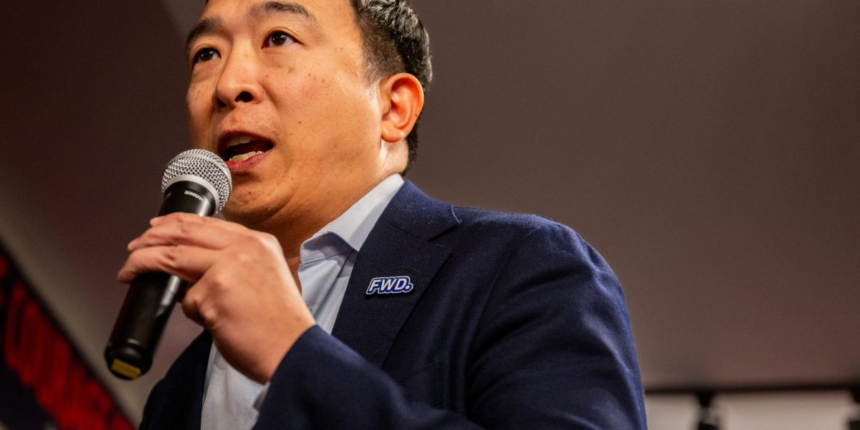
“We’re going to be in a position where we want to shore up labor in every quarter, in every organization and environment,” he said. “We should actually try to stop taxing labor,” and instead, start taxing AI.
“I just came from an AI conference out west, and holy cow!” he said, just after agreeing to the host’s question reconfirming his stance to shift the tax to AI. “They said to me that what we’re going to see in the next six months outstrips what we’ve seen in the last ten years, because the rate of change is on a hockey stick and heading up.”
Despite Yang’s thoughts to shift the tax scheme from laborers to AI companies, some tech leaders think taxing AI is unfeasible. But some think the labor threat isn’t coming from the chatbots, but rather the robots, and that the U.S. should actually plan to tax the labor humanoid robots could perform.
“What we want to do is actually levy a tax on each of those activities that’s paid back to the state to replace that fiscal gap,” Kidd told Fortune, referring to tasks robots may one day be able to perform that will replace human labor.
Kidd uses a hotel like Marriott to illustrate his proposal, noting that replacing a $28-per-hour human housekeeper with a $2-per-hour robot results in a significant loss of tax revenue. But even with a slight tax on the business, the costs incurred would still total less than the human worker.
Unlike Yang, Kidd thinks taxing AI raises too many logistical questions because, as more companies integrate AI into workflows, it’s harder to denote where the AI stops and the human interpretation starts. He thinks that while AI threatens white-collar work, robots could come for physical labor.
“I see AI as an augmentation of knowledge work,” he said. “But I see robotics, humanoid robotics as a replacement for manual work.”