OPEC has absorbed departures before—Qatar left at the beginning of 2019, but Qatar produces almost entirely natural gas rather than oil, so its exit didn’t meaningfully alter the group’s clout. Angola left two years ago, citing production quota disputes, but Angola’s output was modest enough that markets barely flinched. The UAE is categorically different. Along with Iran, the UAE is OPEC’s most significant producer after Saudi Arabia and Iraq—and critically, the Saudis and the UAE had been growing increasingly at odds even before the current war, with disputes over production baselines, regional politics, and strategic direction that stretch back years. The loss of the UAE is the single biggest defection in OPEC’s history.
The political backdrop is a UAE that has spent months absorbing Iranian missile strikes largely alone. UAE diplomatic advisor Anwar Gargash made that frustration explicit at the Gulf Influencers Forum on Monday, just hours before the OPEC announcement. “The Gulf Cooperation Council countries supported each other logistically, but politically and militarily, I think their position has been the weakest historically,” he said. “I expect this weak stance from the Arab League, and I am not surprised by it. But I haven’t expected it from the Cooperation Council, and I am surprised by it.”
Washington seems to have calculated that the UAE cannot join this brewing new regime, although economists urge caution about overstating what the UAE’s exit means for the dollar. As Paul Blustein of the Center for Strategic and International Studies has argued, the Saudis chose the dollar in the 1970s not because of a secret deal, but because of the reality also known as TINA, or “there is no alternative,” with the depth and liquidity of U.S. financial markets leaving Gulf petrostates little practical choice.
In the previous decade, OPEC was boosted by the inclusion of unofficial members, especially Russia, as the so-called OPEC+ group. But since early 2020, the Saudis and Russians have found themselves more at odds over issues including the war in Ukraine and Russia’s close relationship with Iran.
The consequences for global energy markets are immediate and severe. Brent crude has already surged past $100 per barrel as Iranian threats strangle Hormuz—the choke point through which roughly 20% of global crude and liquefied natural gas normally passes. A UAE free to pump at will could eventually inject meaningful new supply, but that relief is months away. In the near term, OPEC’s ability to present a united front in one of the worst energy crises in decades has collapsed.
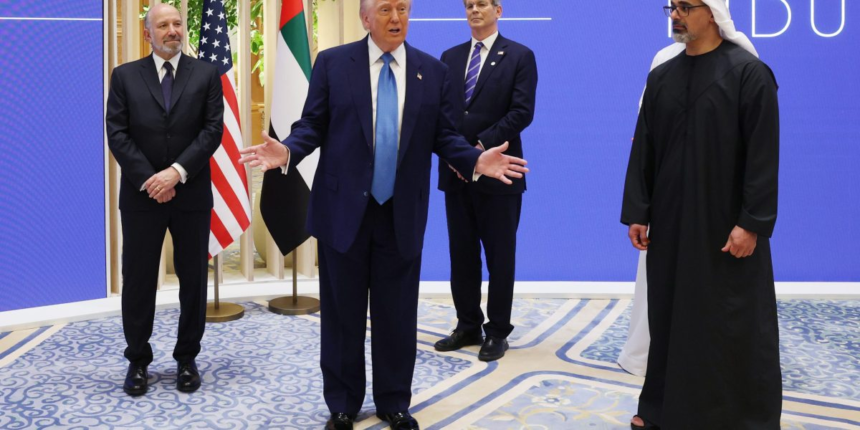
The UAE has also signaled it expects any U.S.-Iran peace settlement to explicitly guarantee freedom of navigation through Hormuz—effectively inserting itself as a veto player in ceasefire negotiations. Abu Dhabi is no longer just an OPEC member or a Gulf ally. It is a full partner in Washington’s regional strategy, with all the leverage that entails.