The purchase created a multi-brand luxury powerhouse made up of Michael Kors jet-set lifestyle apparel and designer bags, the iconic Jimmy Choo footwear brand, plus the red-carpet glamour of Versace. Donatella Versace herself, who stepped up to lead after her brother Gianni’s tragic death in 1997, was in place as the creative visionary and said she was “excited” about the long-term prospects for the brand her brother founded in Milan in 1978. The nouveau American fashion conglomerate was poised to rival European competitors like Louis Vuitton and Hermes owner LVMH and Gucci owner Kering—with soaring revenues to boot.
“We believe that the strength of the Michael Kors and Jimmy Choo brands, and the acquisition of Versace, position us to deliver multiple years of revenue and earnings growth,” said CEO and Chairman John D. Idol. “I am thrilled to have the opportunity to work with Donatella on Versace’s next chapter of growth.”
Seven years on, that vision is in tatters.
Idol has led the company in the two decades since the Hong Kong private equity firm Sportswear Holdings—owned by Silas Chou and Lawrence Stroll—bought a majority stake in Michael Kors in 2003 for about $100 million. Michael Kors’ growth exploded from $20 million in sales in 2004 to roughly $3 billion a decade later. Idol added the chairman title in 2011, the same year the company went public, and he now reports to an eight-member board with an average tenure of 9 years.
Michael Kors sales hit a peak in 2016 of about $4.7 billion, and has been roughly on the decline in the years since. Meanwhile Idol has retained a tight grip on the leadership role even as two probable CEO candidates cycled through Capri. In August 2021, Capri announced that it had hired Joshua Schulman to the newly created role of CEO of Michael Kors—after plucking him from his previous role as CEO of Coach at Tapestry. (Schulman also served a previous stint as CEO of Jimmy Choo, before Capri bought it in 2017.) Schulman was set to ease in as CEO of Michael Kors before completely succeeding Idol in September 2022 as CEO of Capri, with Idol moving up to serve as executive chair. Idol told investors he would focus on long-term strategy, future potential luxury acquisitions, and board leadership as executive chair.
It wasn’t to be. Seven months later, Capri announced that Schulman was out, although Schulman still collected roughly $8 million in payments for contractually guaranteed salary and bonus. Capri also reduced his non-compete agreement to a six-month period. Idol stayed on as chairman and CEO, according to a March 7, 2022 announcement. In January 2023, Capri announced it had hired Cedric Wilmotte to serve as CEO of Michael Kors—only to announce his departure in November 2024. That time, the board didn’t announce a succession plan—only that Wilmotte would lead Michael Kors. Schulman is now CEO at Burberry and Wilmotte is an independent investor. Neither responded to requests for comment.
“Coach’s creativity on these emails (outlet in particular) is killing us… Sorry our backgrounds look cheap and uninspiring,” Idol wrote to Kors executives in May 2023. “This needs to be corrected quickly… Help!!! Fast!!!”
He forwarded a holiday marketing email from Coach to another executive: “[T]hey are winning with the Outlet and promotional strategy in the US. It’s not just brand heat!” Idol wrote.
If Coach-owner Tapestry is the hero, that makes Capri either the underdog or the damsel in distress, said Siegel. “The company needs to reinspire morale, reinspire creativity, reintroduce compelling products and then reconvince the customer to pay for it,” he said. “With any brand rooted in product and storytelling, this is much easier said than done.”
These trends align with the struggles Capri has faced and a transformation plan that already failed to gain traction. By brand revenue, Versace fell from $1.1 billion in fiscal 2023 to $821 million in fiscal 2025; Jimmy Choo dropped from $633 million to $605 million; and crown jewel Michael Kors fell from $3.9 billion to $3 billion. Goodwill impairment was a major driver of the $1 billion loss in fiscal 2025, driven in part by $430 million in impairment charges related to Versace and Jimmy Choo—meaning those acquired businesses are now worth less than previously expected. Total impairment across all three brand assets was $797 million.
Of the Versace-to-Prada sale, Idol said the company was on track to stabilizing its business in fiscal 2027, and planned to reinstate stock buybacks. “With the successful completion of the sale of Versace, we plan to use the proceeds to repay the majority of our debt, which will substantially strengthen our balance sheet,” Idol told investors.
Siegel said it’s fair to say at this point that when Tapestry was looking for a deal, “the business somewhat stopped.”
“I think as soon as that announcement hit, people walked out of the building, shut off the lights, and assumed they would be subsumed by Tapestry and thought they would be let go or retire,” said Siegel. “People were effectively either put on pause or self opted in to a pause.”
In contrast, Tapestry-owned Coach took off like a rocket, while Capri essentially realized it “needed to go back in the building and turn on the lights,” said Siegel.
Idol blamed a “comprehensive transformation plan” of the brand that had started back in the fall of 2023 under his leadership that went awry. The transformation was intended to be “quite radical,” said Idol during a February investor day presentation, and shifted who the brand targeted as consumers.
“As part of this plan, we aimed to appeal to a younger audience, attempted to elevate price points too quickly, and significantly reduced our signature product offering while injecting too much fashion for our core consumer,” said Idol. That transformation backfired spectacularly. The plan not only didn’t work it alienated core consumers, Idol told analysts.
“The customer came back and said, ‘that’s not exactly what we expect from Michael Kors,’” Idol said during the fourth quarter earnings call. “There is a window of pricing that we enjoy consuming your products in, and we’d really like you to stay there.”
But undoing damage is tricky. Discounting prices to that extent had a negative effect on the brand image and on the way customers and potential customers perceived the Kors brand, Idol told analysts. The company’s average unit retail prices (AURs), which indicate the average price customers pay for products as opposed to the ticket price, dropped by “high single digits” for the Michael Kors brand, said Idol. The widening gap between the raised ticket price and the actual selling price can do a number on profit margins, and it alters brand perception.
Rick Patel, managing director of equity research at Raymond James, compared Tapestry’s Coach brand to Capri. Tapestry elevated its perception in the market as being a premier luxury brand, while Michael Kors became known as a heavily discounted brand.
“Right now, part of improving consumer perception means pulling back on promotions, having compelling newness, and supporting it with strong storytelling,” Patel said. Michael Kors customers “became accustomed to waiting for sales before transacting, which is the opposite of what you want to see for a premier brand.”
Now, Idol said the company has refocused on Michael Kors and Jimmy Choo and they’re going back to basics. In May, Idol pointed to some early signs of potential progress driven by new purse collections, the Leila, Dakota, and Bryant, priced at what has been a historical sweet spot for Kors, which is $200 to $400.
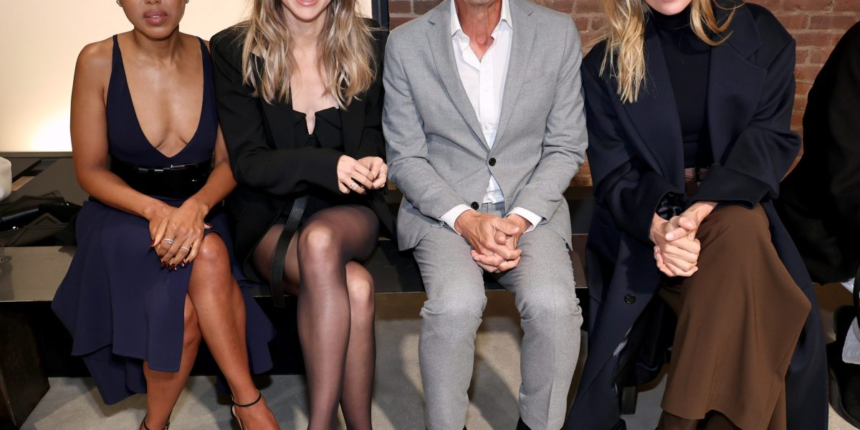
Capri is also planning a major store revamp, renovating 50% of its retail spaces over the next three years. There’s also a new marketing campaign, Hotel Stories, that focuses on “the joy of traveling the world in style.” The first chapter featured the glittering Ibiza landscape and English model and actress Suki Waterhouse. During the call with analysts, Idol leaned in heavily on the celebrity tethers to the Kors brand. Idol noted that the Fall-Winter 2025 runway show included attendees Waterhouse and actresses Uma Thurman, Kerry Washington, and Lea Michelle.
Idol also promised a “renewed focus” on Jimmy Choo, with marketing focused on “an empowered sense of glamour” and growing the brand’s accessories and casual footwear offerings.
Idol has said these initiatives could help Capri return to growth in fiscal 2027 and beyond. The plan, as it stands, is to target $4 billion in revenue from Kors and $800 million from Jimmy Choo. Whether Capri can execute the playbook successfully is an open question and the company is asking consumers to give a second chance to a brand they learned to wait for discounts to buy all in a luxury market that was smaller than it was two years ago.
Siegel noted that retail is “rife” with turnarounds. Many companies that were once high flyers find themselves on the outs. “That’s what makes it fashion,” Siegel said.