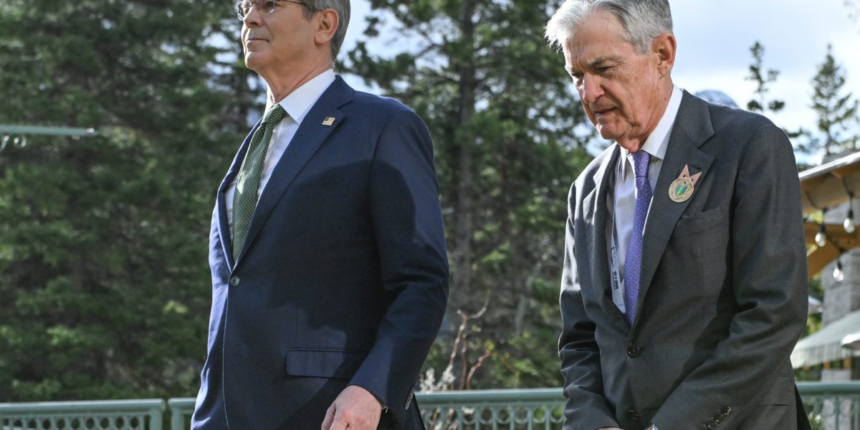
There have rarely been years when the Federal Reserve has been so carefully watched by the White House, investors, analysts, and the media, as this one. In 2025, the Federal Open Market Committee (FOMC) found itself in a one-sided battle with the Oval Office, with President Trump aggressively lobbying for the base rate to be lowered. (This, of course, came after aggressive lobbying from Trump before the election for the base rate not to be lowered.)
The pressure from Trump may not have been as effective as he’d hoped, with the base rate still at 3.75 to 4%, but the attention on the central bank has remained. On a near-daily basis, markets are reacting to hints dropped by regional Federal Reserve bank presidents, Fed governors, FOMC meeting notes, and data which may color the decision-making of the group.
And while members of the FOMC warn investors against reading into their apparent “hints” too closely, Treasury Secretary Scott Bessent is calling time on the influence these individuals now wield.
“In order to have an environment that sustains rising living standards for our citizens, sustaining a low stable inflation and an environment with maximum employment really matters for all of us. That is what the FOMC is charged by Congress to do. That’s our job.”
Bessent isn’t such a fan of members of the FOMC speaking so freely on the base interest rate. He said: “I think we just need to calm down all these speeches by bank presidents that are just redundant. Why don’t they actually just come out and talk about the meaningful issues [for] the American people, rather than the short-term view of the next meeting?”
One might argue that Fed presidents sharing their outlook on their dual mandate—the job market and affordability when it comes to inflation—is particularly meaningful to the American people.
Bessent also claimed some regional Fed presidents weren’t living according to the “design” of the Fed: “These regional presidents were supposed to be people from the district, and it was supposed to break the New York hold on the reserve banks.” Three or four presidents, he suggested, don’t live in their districts and “go out into the country and then come back on weekends.”
He added: “Congress has, we believe, ordered us to conduct our business in a nonpolitical way at all times—not just some of the time. We never use our tools to support or oppose a political party, a politician, or any political outcome.”
Powell won’t have to field these questions for much longer, with his term coming to an end in the spring. On this, Bessent also had an update: The nomination for the next chairman could come before Christmas.