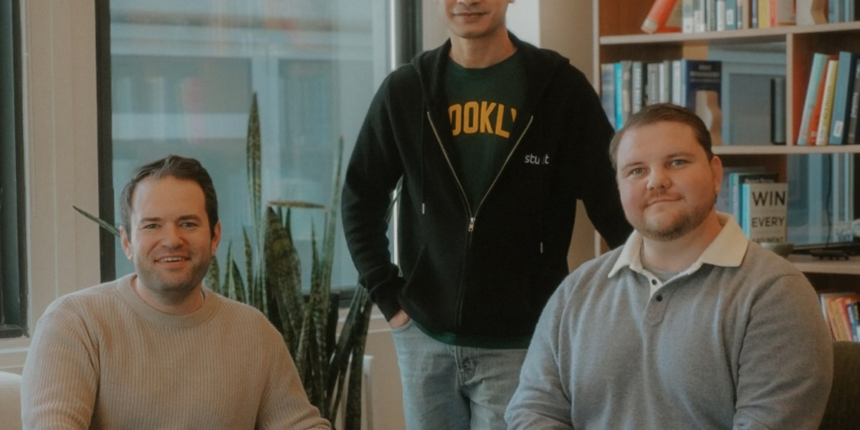
Tarek Alaruri asked me: Have you ever seen the TV show Dirty Jobs?
I absolutely have, but if you haven’t—it’s a rollicking reality TV jaunt through some of the messiest jobs out there. There are rattlesnake catchers, sure, but there are also a deluge of examples of industrial jobs like pipefitting, car crushing, and concrete chipping.
“Those are our customers,” Alaruri says proudly.
Alaruri’s startup, Stuut, is in a messy business of its own—accounts receivable, the money due to a company for goods or services that have been delivered, but not yet been paid for. And there’s a reason Stuut focuses on those companies.
In tech, companies tend to have “a big wad of cash in your bank account from VCs,” Alaruri said. But for many of Stuut’s customers, collecting payment is existential: “These companies actually need the revenue to pay bonuses. They actually need the revenue to pay holiday bonuses, and need to hire more people to scale their growth.”
Now, Stuut has raised a $29.5 million Series A, led by Andreessen Horowitz, Fortune has exclusively learned. Activant Capital, Khosla Ventures, 1984 Ventures, Carya Venture Partners, Page One Ventures, Vesey Ventures, and Valley Ventures participated in the round.
Stuut and its customers are trying to solve an effectively universal problem: Companies can lose as much as 5% of EBITDA by tracking down payments manually. Stuut’s customer acquisition so far has come primarily from cold calls and network effects. And, compared to other businesses, it’s been a pretty easy pitch: I can automatically collect your money that you’re owed. And the ramp-up has been fast.
“We technically started the business at the beginning of last year,” said Alaruri. “But I’d say Day One was really around November, December of last year…We started seeing impact. We had a company called CharterUp go live in two days, collect $3.4 million, and see a 20% increase in collection.”
These are also companies interested in their piece of the AI action—but need a product that fulfills its promises.
“You have to be able to prove you can do what you say you’re going to do [with AI],” said Alaruri. “You look at the older wave of software and you have people promising automation—and they take 12, 18, 24 months to deploy. So it matters if you say ‘hey, we can save you 40% in six months, and we’ll get up and running next week,’ and you then can execute.”
See you tomorrow,