Talks to extend the ceasefire between the U.S. and Iran are dead in the water, but traffic through the Strait of Hormuz is anything but.
The number of ships transiting the contested waterway remains just a fraction of pre-war levels, but fresh reports indicate activity is busier than previously thought.
That translates to about 17 ships per day. While that is well below the daily rate of more than 100 ships before the U.S. and Israel launched their war on Iran on Feb. 28, that’s significantly more than other reports show.
For example, U.S. Navy data published by the Joint Maritime Information Center tallied 558 cargo ships and oil tankers crossing the strait during the three-month period from March 1 to June 3. And maritime data company Kpler counted 895 ships between March 1 and May 19.
The Islamic Revolutionary Guard Corps established its lane soon after the war started. Since then, the IRGC has charged tolls on ships that have been granted permission and attacked any that tried to cross unauthorized.
To bypass the IRGC-controlled lane, the U.S. Navy began mine-clearing operations in April and sent two destroyers through the strait to re-establish freedom of navigation near Oman’s coast. That was followed by Project Freedom last month, which aimed to get more ships out with U.S. help, but it ended after only a few days.
The alternate lane has become even more important as global oil markets are poised to head off a cliff in a matter of weeks, when crude reserves are expected to reach critically low levels.
But Iran’s ability to stop Hormuz traffic has emerged as its key source of leverage over the U.S., and the regime will not relinquish it, turning the Persian Gulf into more of a combat zone recently despite the ceasefire.
Last month, the IRGC launched attacks into the Gulf and attempted to lay new underwater mines. The U.S. responded by destroying Iranian boats and bombing missile sites in Iran that tried to shoot down U.S. aircraft.
Last weekend, the U.S. disabled a ship attempting to breach its naval blockade by firing a missile into the engine room. Also last weekend, the U.S. conducted “self-defense strikes” in Goruk, Iran, and Qeshm Island.
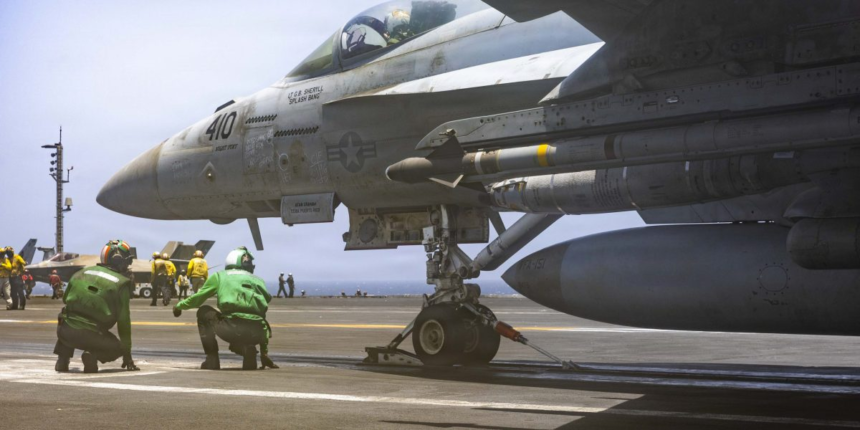
After Iran shot down a U.S. drone, fighter aircraft destroyed Iranian air defenses, a ground control station, and two attack drones that threatened ships in transit, Central Command said.
It attributed the steady wave of Hormuz transits to “quiet U.S. naval overwatch” and a growing willingness among ship operators to finally exit despite the risks.
The report didn’t identify the helicopters, and Central Command declined to comment when asked if they were from the U.S. military.
The continued flow of Hormuz traffic through U.S. and Iranian routes in the face of persistent attacks could help establish a new normal where the world adapts to the reality of the vital chokepoint remaining at risk.
“Desperate buyers always manage to find new sellers when the old ones can’t deliver. The longer the world lives without the Gulf’s supplies, the easier it gets,” he added.