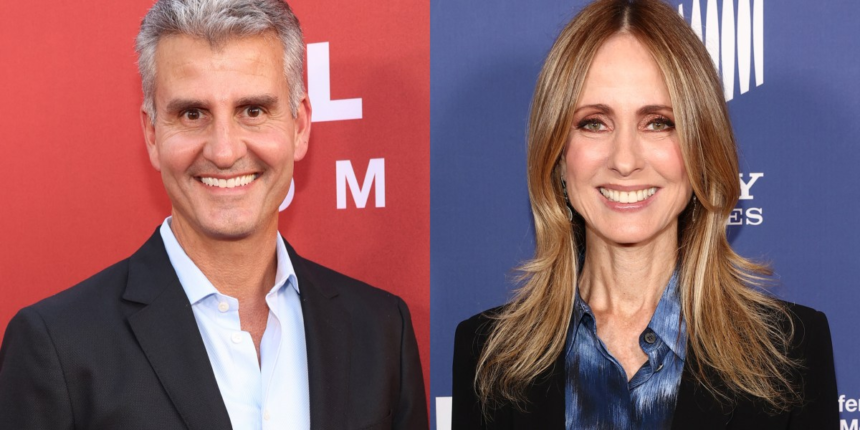
And there’s the rub. Even for the most self-assured executives, that dynamic could prove awkward. The CEO runner-up has to nurse a dented ego while answering to the succession race’s ultimate winner. The incoming CEO, meanwhile, has to manage a team that includes someone who wanted their job.
On paper at least, Disney has set D’Amaro and Walden up to navigate the many pitfalls such a scenario poses by giving the new CEO and chief creative officer roles that are distinct and complementary.
“She’s on the creative side, whereas D’Amaro is more on the financial and parks side,” says Susan Sandlund, a managing director at Pearl Meyer who leads the firm’s leadership consulting practice. Walden “brings value in a whole different way than D’Amaro does,” she says. “In combination, it’s a pretty powerful team.”
Still, distinct titles and designated realms of influence won’t guarantee a smooth partnership. The onus is on D’Amaro to settle on a common, shared goal that he can rally his new team around and to delegate meaningful tasks to Walden, says Emma Zhao, an assistant professor of commerce at UVA’s McIntire School of Commerce. “That helps put aside some of those individual concerns and motivations.”
Sandlund, who has counseled executives in Walden’s position before, suggests her best strategy is to sit tight. “My advice is don’t make any rash moves right now. A lot of people will be calling you for other CEO roles, which you could jump at immediately,” she says. “But if an executive really likes where they are, they love the culture, they’ve been there a long time, then they often want to see, what can the company do that would make it worth sticking around?”