Regardless of how you view that 938 number, there’s one overall resounding agreement people have: most voters want billionaires to pay their fair share. With two separate billionaire tax proposals now gaining traction (one nationwide and one in California specifically), a new poll from UC Berkeley’s Institute of Governmental Studies quantifies just how much the average American thinks the rich should pay up.
Responses fell along ideological lines. Seventy-two percent of Democrats back the tax, and so does 51% of no-party-preference voters. But more than seven in 10 Republicans and strongly conservative voters oppose it.
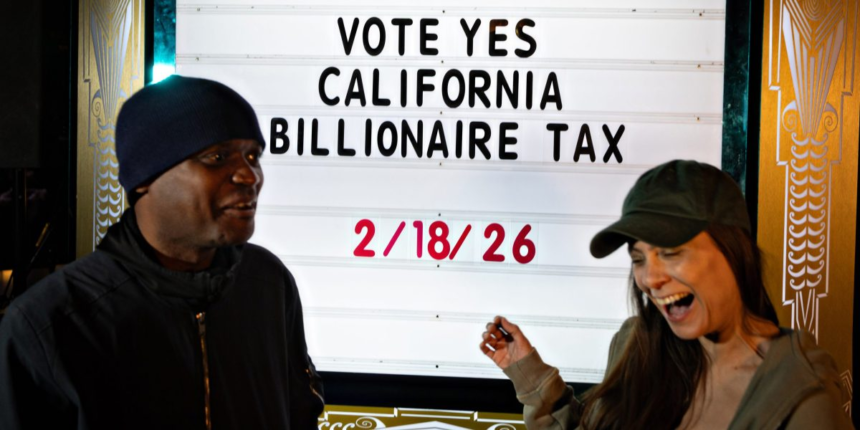
The California Billionaire Tax Act didn’t come from a politician but from a union. SEIU-United Healthcare Workers West, representing 120,000 healthcare workers, filed the ballot initiative in October 2025 with a specific crisis in mind: federal Medicaid cuts threatening to strip healthcare from more than 3 million working-class Californians.
To design the tax, the union tapped UC Berkeley economist Emmanuel Saez, who calculated that American billionaires currently pay just 1.3% of their wealth in taxes, down from 3.1% under President Ronald Reagan.
The revenue is projected to be at $100 billion over five years and would flow 90% into healthcare, with the remaining 10% into education and food assistance. The measure still needs nearly 875,000 valid signatures by June 24 to reach the November ballot.
In its first year, the revenue would fund one-time $3,000 checks for households earning under $150,000, covering roughly three-quarters of the country. And like the California tax, the bill would address the $1.1 trillion in Medicaid and ACA cuts, in addition to capping childcare costs at 7% of household income, and establishing a $60,000 minimum salary for public school teachers.
“We all agreed that the fight for $15 is long gone,” Jayaraman told Fortune. “It’s time for a new kind of frame.”
What emerged was the concept of a living wage for all, pegged to what the MIT Living Wage Calculator says it actually costs to live, with no carveouts for tipped workers.
Since then, $30-wage bills have been introduced in New York City, Hawaii, and Los Angeles. Bills for $25 per hour are advancing in DC, Maryland, Pennsylvania, and federally. Twenty states remain stuck at the federal floor of $7.25, unchanged since 2009.
The billionaire tax and the $30-wage campaigns share more than timing — they share a target.
“We see these two things in California go hand in hand,” Jayaraman said. “There are two parts to the same plan. Billionaires should pay tax like everybody else to help contribute to society, and they should pay their employees, whose labor they profit from, enough to survive.”
She added: “Right now, billionaires are paying nothing. They should pay their fair share.”
“Minimum wage is by far the most popular issue out there right now,” Jayaraman said. “But the billionaires tax is a close second.”