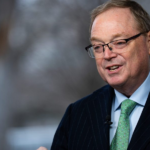
“There’s a lot of things you can fund that will go nowhere,” Buffett said. “If you’re not addressing the real issue of rule of law then you just can’t have success.”
In the interview with CNBC, Buffett raised skepticism about placing money in the hands of big institutions or governments. “When you start trying to write $200 and $300 million checks, only institutions can absorb those or governments, and I’m not a big fan of writing checks to institutions or governments,” he said. “I don’t trust them that much to make good judgments or where they have big overheads.”
Policy experts and economists have echoed Buffett’s sentiment, drawing a connection between the rule of law and income inequality. “The rule of law is extremely important to protect the poor,” Landry Signé, a senior fellow at Brookings Institution’s global economy and development program, told Fortune. “If the same law [applies] to everyone, that means that you will not have that asymmetry where the wealthiest will get their way while the poorest will be abused.”
Signé added that governments must ensure key rights for citizens that secure inclusive opportunities in order to develop a healthy economy. “You also have the critical importance in securing property rights,” Signé said. “That’s why the rule of law is key to unlock economic freedom. It is key to unlock innovation, to unlock entrepreneurship.”
In the CNBC interview, Buffett made clear his intentions of giving away his father’s wealth, though he cautioned that he and his siblings ought to put some careful thought into their donations. “We should be giving away as much as we can give away, intelligently and effectively, while we’re here doing it,” he said.