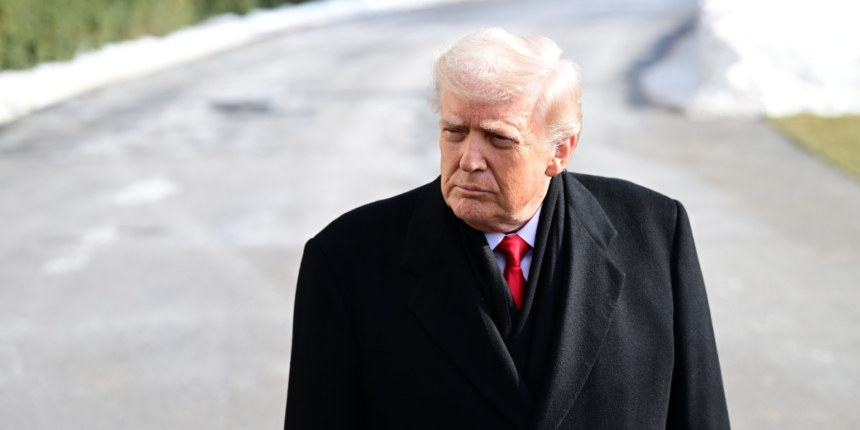
If something sounds too good to be true, a realist would suggest that’s because it might be. When President Trump promised on the campaign trail to “end inflation,” it might have been one of those moments.
What Trump may have been trying to convey was that he would bring down rampant price rises, after inflation had stood comfortably ahead of the Fed’s 2% target through 2024. Latest data from the Bureau of Labor Statistics shows the annual rate of inflation currently sits at 2.7%.
2025 was, after all, the year of Liberation Day tariffs. On April 2, President Trump announced a raft of increased duties on every nation on the planet—including those which held existing trade agreements. Since then, many partners have come to a deal with the White House, and while below the initially threatened threshold, the agreements have still resulted in increased levies on both sides.
Even for a one-off, consumers still have to pay for that adjustment, argued Emma Hussey, a policy advisor to Sen. Warren on the Banking Committee. She told Fortune: “Policymakers at the Fed can debate whether to ‘look through’ inflation, but families don’t get to choose to look through higher costs. Trump’s chaotic tariffs and failed economic policies have increased prices—even if these price-increases are ‘one-time’ in the data, they’re permanent for families already stretched thin.”
This was a fact the White House was keen to point out, as spokesman Kush Desai told Fortune: “The simple reality is that Americans have objectively gotten better off since President Trump took office with inflation cooling, real wages rising, and economic growth accelerating—the exact opposite of what transpired under Joe Biden.”