It took just one week for Trump to create—and then resolve—the Greenland crisis. Over the course of a week in January, he followed the strategy laid out in his book almost line by line.
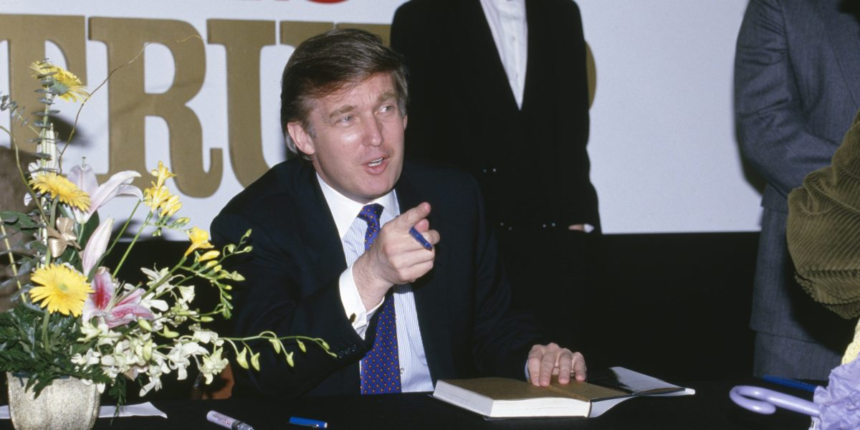
“My style of deal-making is quite simple and straightforward,” Trump writes in the book. “I aim very high, and then I just keep pushing and pushing and pushing to get what I’m after.”
But the crash itself may have been part of the strategy.
In business schools, they call this manipulating the BATNA: the Best Alternative to a Negotiated Agreement. By making the alternative to a deal look costly and destabilizing, Trump artificially inflates the downside risk, positioning America—and himself—as the least bad option.
The best way to deal, Trump wrote in his book, was to “deal from strength, and leverage is the biggest strength you can have.” Leverage, he said, “having something the other guy wants. Or better yet, needs. Or best of all, simply can’t do without.” No European nation can imagine living without the protections of NATO and the good will of the U.S.
“Now everyone’s saying, ‘Oh, good,’” Trump said. “That’s probably the biggest statement I made, because people thought I would use force. I don’t have to use force. I don’t want to use force. I won’t use force.”
But the “final key” to Trump’s negotiation strategy, he writes, is bravado.
“I play to people’s fantasies,” he says.
With stakes that high, even if the substance of the deal barely shifts the underlying balance of power, Trump can still claim to have done something on Greenland.
“That’s why a little hyperbole never hurts,” he wrote. “People want to believe that something is the biggest, the greatest, and the most spectacular.”