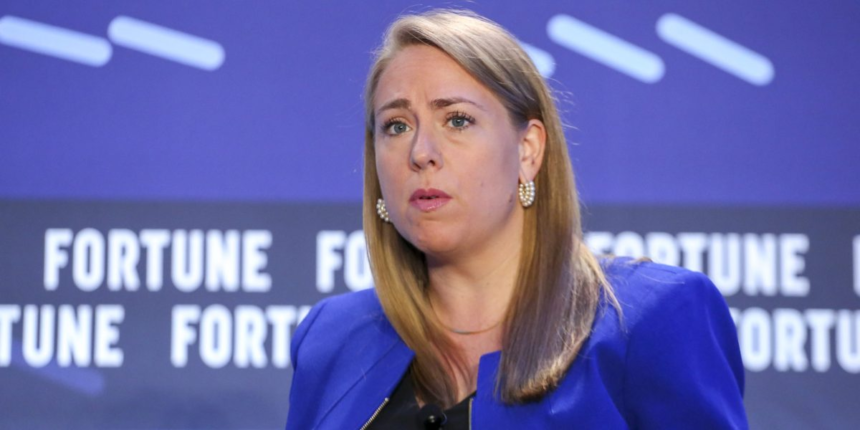
The New York Times has called the lawsuit politically motivated. The fight over what it means has only just begun. Lucas offered a defense of a perspective that is proving perhaps surprisingly unstraightforward in this day and age: the concept that civil rights apply equally to everyone.
The complaint, filed May 4 in the U.S. District Court for the Southern District of New York, centers on a 2025 hiring decision in the Times‘ Real Estate section. According to the EEOC, a white male Times employee—a nine-year veteran of the paper’s International Desk with more than 25 digital journalism awards and direct real-estate journalism experience—applied for an open deputy real estate editor position. He was never called back for the final interview round.
The four candidates who did advance: a white woman, a Black man, an Asian woman and a multiracial woman. The multiracial woman got the job. Per the EEOC complaint, she had no experience covering real estate, which had been listed as a basic qualification in the public posting. Interview panel notes described her as “a bit green overall.” Internal communications showed the editor overseeing the hire had effectively pre-selected her before the first interview was conducted.
Lucas made the argument plainly at the Atlanta summit: “We are the Equal Employment Opportunity Commission,” she told the audience of HR leaders and executives. “We’re not the Equitable Outcomes Commission.” Title VII, she argued, does not protect specific groups—it protects against discrimination on the basis of any race, any sex. “The way to stop discriminating based on race,” she said, “is to stop discriminating based on race.”
Critics, including a significant faction inside the agency itself, argue the enforcement shift has less to do with equal protection than political targeting. A New York Times investigation published in April cited more than a dozen current and former EEOC employees—Republicans and Democrats alike—who said they faced institutional pressure to pursue politically sensitive reverse-discrimination cases even when evidence was thin.
At the Fortune summit, Lucas did not address these specific internal allegations. She pointed instead to a headline performance figure: The agency recovered $528 million for discrimination victims in the most recent fiscal year, she said—the highest total in the agency’s 60-year history. “If we had narrowed the aperture,” she asked the audience, “how would we recover that?”
For companies watching the case, the EEOC’s legal theory carries a direct warning: public DEI commitments, diversity reports, demographic targets, and internal communications about representation goals could all surface as evidence in discrimination suits—brought not by the groups those programs were designed to benefit, but by white and male employees who weren’t promoted.
The Times case is pending in federal court in Manhattan. Case No. 1:26-cv-03704.