With U.S. crude nearly doubling in price since the beginning of the year; the Strait of Hormuz still more or less blocked; and the subsequent rising cost of almost everything from cars to flights to plastics to semiconductors, April is shaping up to be a very cruel month, indeed.
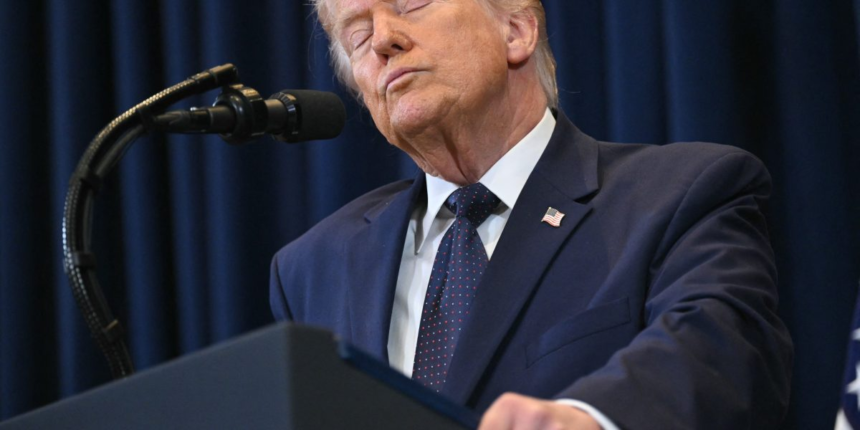
President Donald Trump will address the nation at 9 p.m. ET Wednesday to deliver what the White House has called “an important update on Iran”—his first primetime remarks since the U.S. and Israel launched strikes on Feb. 28. The address will air across all four major broadcast networks, forcing scheduled programming to move aside, including the season finale of The Masked Singer and a special episode of Survivor.
“He may declare that the strait is wide open and there’s no problem,” Tom Kloza, a veteran oil analyst and advisor to Gulf Oil, told Fortune. “You just don’t know.”
In a sign of counterprogramming, Iranian state media reported Wednesday that Pezeshkian will release an “important” letter addressed directly to the American people, expected shortly.
Even the word “ceasefire” is slippery in this context, Kloza warned. “One man’s ceasefire is another’s cauldron of boiling war,” he said. “It’s not mathematical language. It’s very equivocal.”
The speech arrives against a backdrop of continued escalation. An Iranian missile struck a fuel-oil tanker in Qatari waters Wednesday morning, while Houthi rebels launched a third barrage of missiles toward Israel. More than 3,000 people have been killed across the Middle East, including 13 U.S. service members. And an American journalist was kidnapped in Iraq on Tuesday by suspected Iranian-backed militants.
“In April, there is nothing,” Birol said.
Marko Papic of BCA Research estimates the world has lost 4.5 million to 5 million barrels per day, about 5% of global supply, but warns that number will double by mid-April as strategic reserves run dry. The cumulative loss of crude, refined products, and petrochemicals is approaching half a billion barrels, Kloza estimated.
“I have a hunch that whatever he says, it’s not going to have the desired impact of really reversing all of these high prices,” Kloza said. “I think we’ve started something now that can’t be stopped in its tracks.”