Woods said Exxon could have a technical team on the ground in Venezuela in less than two weeks to begin assessing the situation. But he was non-committal beyond that. He expressed confidence the Trump administration and the acting Venezuelan leadership can work out the necessary reforms.
“We’ve had our assets seized there twice,” Wood said, noting that Exxon’s Venezuelan assets were most recently expropriated in 2007. “So, you can imagine to reenter a third time would require some pretty significant changes from what we’ve historically seen here and what is currently the state.”
Trump has used the 2007 expropriation in Venezuela, specifically from Conoco and Exxon, as a pretense for the shocking Jan. 3 military attack and arrest of leader Nicolás Maduro, as well as for claims of drug and human trafficking. Trump has repeatedly called the expropriations the largest theft in American history.
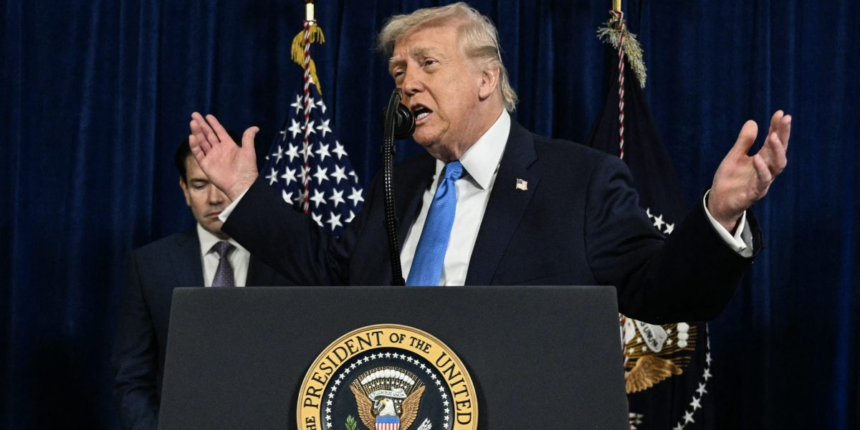
“We’re going to start talking about the confines of a deal,” Trump said at the end of the public meeting before starting a private sit down. “We have to get [oil companies] to invest, and we have to get their money back as quickly as we can, and then we can divvy it all up between Venezuela and the United States and them. I think the formula is simple … It’s going to be a tremendous success.”
Trump told Woods and others he wants “speed and quality.”
Energy analysts see Chevron—now operating in partnership with Venezuelan state oil company PDVSA—as the biggest winner in Venezuela because of its existing presence and infrastructure, while others remain hesitant to invest. “We are certainly committed to [Venezuela’s] present,” Nelson said, “and we very much look forward as a proud American company to help it build a better future.”
More than doubling Venezuela’s current oil production likely would take until 2030 and cost about $110 billion, according to research firm Rystad Energy, while tripling back to levels from 2000 would take well over a decade and cost closer to $185 billion.
Similar to Exxon, ConocoPhillips Chairman and CEO Ryan Lance expressed interest but he argued major reforms are required first. Conoco is the largest creditor from Venezuela’s natural resources expropriations from almost 20 years ago.
“As we think big and bold, we need to be also thinking about even restructuring the entire Venezuelan energy system, including PDVSA,” Lance said. “If we can do that and think bold, there’s opportunity.”
Trump told Lance that companies will start with a “clean slate” and not be reimbursed for past write offs, which Lance said were valued at about $12 billion for Conoco.
Trump did eventually acknowledge the risk the oil companies would take when asked about “backstops.” “They know the risks. There are risks. We’re going to help them out. We’re going to make it easy, and they’re going to be there for a long time.”
However, most of what the executives said was “cheerleading” for Trump, while Exxon provided the key reality check, said Dan Pickering, founder of the Pickering Energy Partners consulting and research firm.
“The interest is high; the willingness is unclear,” Pickering said of companies investing billions of their dollars in an unstable Venezuela.
He predicts Venezuela could realistically raise its production by 50% within three years, but that would still fall well short of its historic volumes. And most of the U.S. oil companies on the outside looking in only see new Venezuelan oil as competition that would lower oil prices and profits, Pickering said. “There is no good news for [U.S.] shale in a reopening of Venezuela. They’re not going to be happy.”
For Trump, that means lower prices at the pump, which he values.
Trump reiterated that the U.S. is in the process of taking at least 30 million barrels of Venezuelan crude oil over time to the U.S. Gulf Coast to sell to U.S. refiners and others as part of a deal with Venezuela. The proceeds would be controlled by the White House in external bank accounts and mostly returned to Venezuela pending government cooperation.