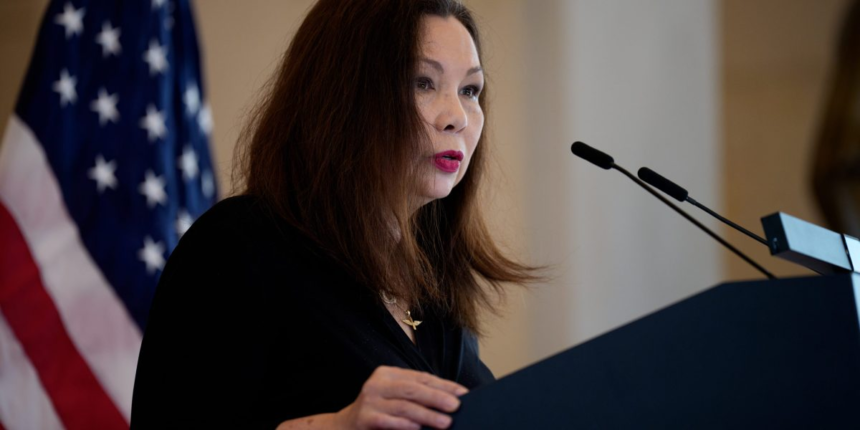
“It fails to strengthen confidence in good government, and the American people are understandably suspicious of a DOT and FAA that does not show its work,” Duckworth said during the Commerce Committee’s aviation subcommittee hearing.
Duckworth got political during Wednesday’s hearing because she took offense to the way Republican leaders on the committee said when they announced it that it would “examine the toll Democrats’ government shutdown took on the air traffic control system, airline operations, and training.”
“If Tammy Duckworth had a shred of integrity and honesty, she would be commending Secretary Duffy’s heroic efforts to keep the skies safe while she and fellow Democrats prioritized playing stupid political games,” White House spokesman Kush Desai said Wednesday.
Although Duckworth led the hearing on a detour into the debate about health insurance subsidies, most of the discussion focused on worries that there could be lasting damage to efforts to eliminate the longstanding shortage of air traffic controllers and attract young people to the profession.
“How do you go into a high school and encourage someone who is about to graduate to get excited about aviation? Get excited about the industry when the headline every single day is you don’t get paid?” said former New Hampshire Gov. Chris Sununu, who now leads the Airlines for America trade group.
Efforts to address the controller shortage and hire more FAA technicians and test pilots were set back by the shutdown because some people decided to leave the profession and the yearslong training process for these crucial FAA employees was interrupted. The government did find a way to keep the academy that trains air traffic controllers open. But Duffy said that some students and young controllers quit and the number of experienced controllers who decided to retire spiked.
“Asking these dedicated, patriotic American workers to survive working full time for more than a month without pay is simply not sustainable,” Daniels said. “That situation creates substantial distractions for individuals who are already engaged in extremely stressful work.”
Jim Viola, who leads the General Aviation Manufacturers Association, said he understands how disruptive shutdowns can be because he lived through them when he used to work at the FAA. He said this fall’s shutdown only added to the backlog of applications to get new designs and advancements of planes certified.
“The most significant impact of the 2025 government shutdown on manufacturers is that no new certification projects were allowed to start which impacted the pace of U.S. aerospace innovation and completely halted new business activities,” Viola said. “During the shutdown, the FAA could not accept or facilitate work on any new applications for design and production approvals.”