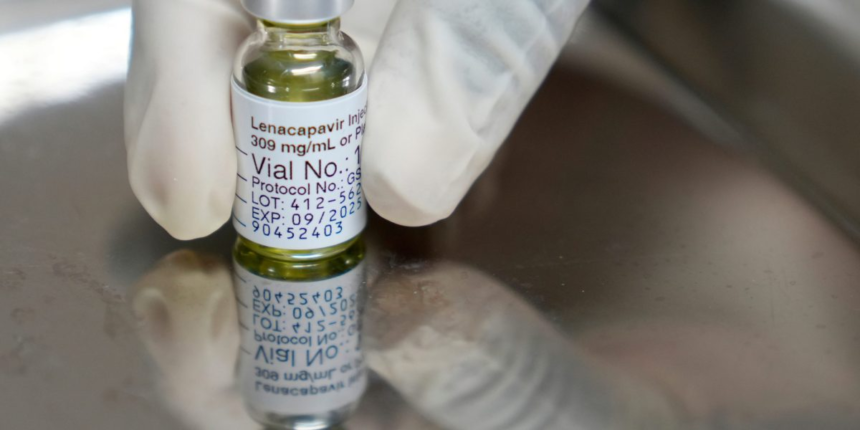
Daniel O’Day, chair and CEO of Gilead Sciences, described the Eswatini rollout as “extraordinary” because “it’s the first time in history that a new HIV medicine is reaching a country in sub-Saharan Africa in the same year as approval of the United States” and because Eswatini “is the country with the highest incidence of HIV in the world.” The U.S. approved the drug in June.
That was increased to 325,000 due to “early demand signs,” Brad Smith, senior advisor for the Bureau of Global Health Security and Diplomacy, told journalists.
The U.S. government has noted that over 25 million people across Africa are living with HIV.
In Eswatini, a tiny kingdom in southern Africa, about 6,000 high-risk people are set to benefit from the drug’s initial rollout, primarily to prevent HIV transmission from mothers to newborns. Home to roughly 1.2 million people, Eswatini currently has over 200,000 people living with HIV, with most receiving treatment funded by PEPFAR, Smith said.
In July, the World Health Organization approved lenacapavir as an additional HIV prevention option. UNAIDS has called long-acting injectables a “fresh option” amid concerns that foreign funding cuts could worsen infections.
Motsoaledi also welcomed Gilead’s steep price reduction from over $28,000 per person annually in the U.S. to approximately $40 for lower-income countries.
___