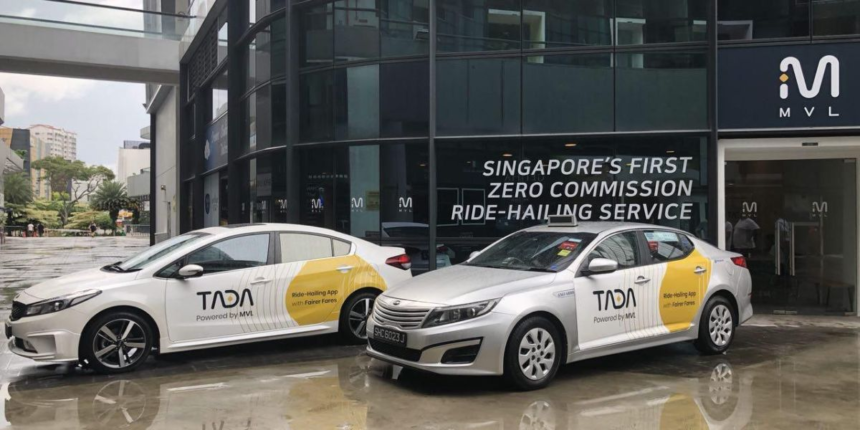
In June 2026, the world’s leading Web3 taxi app will be launched in the Big Apple.
This ride-hailing app—called TADA—uses blockchain technology to connect drivers and riders via smart contracts. Its use of decentralized tech enables greater transparency, fairer earnings for drivers, and cost savings for riders, co-founder Kay Woo told Fortune in a Dec. 24 interview.
“We don’t work as an intermediary. We are becoming the software for both [drivers and riders] and while they’re using our network, they just need to simply pay a small fee,” Woo says.
Since its launch, TADA has expanded to various markets in Asia, including Cambodia and Vietnam in 2019, and Thailand and Hong Kong in 2024. Within the U.S., the company is currently trialing its tech in Denver, and plans to launch officially in NYC in June.
The origin story
TADA’s entry to NYC marks a full-circle moment for Woo, who had first begun his entrepreneurship journey in the city.
In 2012, alongside a friend, Woo created a social gathering application with the goal of bringing people together—but the app flopped.
“I couldn’t sell the product. I come from an engineering and finance background, and my co-founder was an engineer. We were just a bunch of nerds,” Woo says.
After a few failures, they decided to create a product that would generate revenue from the get-go, and a ride-hailing app came to mind.
In 2014, Woo and Han moved back to Asia, and set out to digitalise the cross-border mobility services between the bustling cities of Hong Kong and Shenzhen.
According to Woo, although Uber and DiDi were popular in the region, ride-hailing apps didn’t yet offer cross-border transport services. Instead, car rental companies and drivers managed reservations with pen and paper—and Woo saw a gap in the market.
“Among Southeast Asian countries, Singapore is super important to showcase all other neighboring countries in Southeast Asia,” Woo says. “We got lucky in picking the right place, but also the right time.”
Aside from revenue from its platform fees, TADA has several other revenue streams.
Besides generating a profit from the broader Web3 platform by its parent company, MVL, TADA sells anonymized vehicle and driving data—with consent—to ecosystem partners, and offers MVL tokens to be traded on external cryptocurrency exchanges.
Journey to the west
“Whenever I go to New York, I interview the old drivers, and everybody says the same thing: current ride-hailing services take too much commission, but they don’t have any choice,” quips Woo. “We need to give them a choice—TADA is going to be a painkiller for them.”
Woo is a big proponent of disruption, believing it to be an essential tenet of progress.
He alludes to ‘legacy’ ride-hailing apps like Uber and Grab as part of the “first wave”, which disrupted the traditional taxi market. But these platforms were built with capitalistic goals, he says, leading to skyrocketing platform fees and prices.
“And now it’s their time to be disrupted with a new type of model,” Woo adds.