Russia’s war on Ukraine began four years before the U.S.-Israel war on Iran did, but the battle lines are getting blurrier, while the conflicts threaten to draw in more participants.
The stakes are further elevated as President Donald Trump deploys thousands of U.S. troops to the Middle East for an anticipated ground assault meant to reopen the Strait of Hormuz.
In fact, Ukrainian President Volodymyr Zelenskyy also made unannounced visits to the United Arab Emirates and Qatar to reach similar agreements. That’s as the Persian Gulf states have been bombarded by Iranian missiles and drones, which are overwhelming their U.S. air-defense systems.
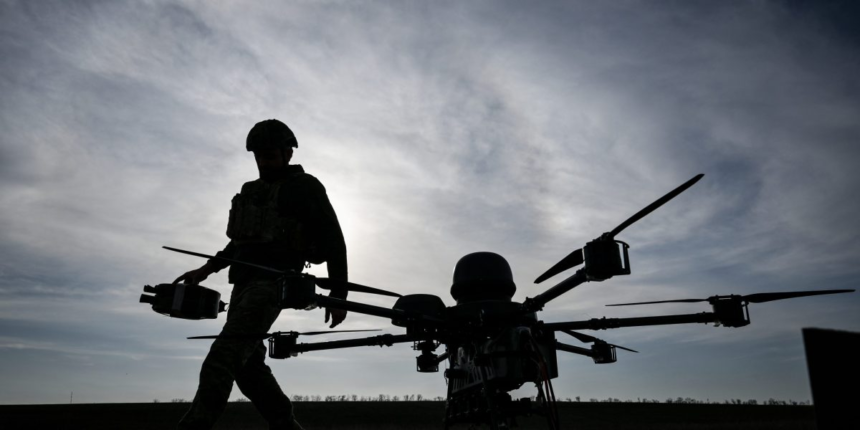
Spaniel, who studies war, nuclear proliferation, and terrorism, also cited reports that Russia is now providing Tehran with upgraded versions of Iran’s own Shahed drones. That deepens Moscow’s involvement in the Iran war after Western intelligence widely flagged evidence that Russia has been providing Iran with targeting information on U.S. assets in the region.
“We are still not at a true world war as there is no one actor fighting on two fronts simultaneously like the United States during World War II,” Spaniel added. “But it is further connecting the battlefield outcomes, and it will have longer-lasting implications for how the battle lines are divided.”
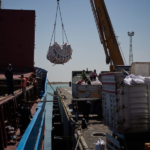
Israel hit warships, a port, a command center and a shipyard used to repair and maintain vessels, the report said. But Russia can still use land routes to arm Iran. Trucks carrying what Russia said was humanitarian aid went to Iran via Azerbaijan, and it’s possible they could contain drones, sources told the AP.
Russian aid to Iran comes after the U.S. and NATO allies supplied Ukraine with weapons and intelligence, though reports saying U.S. and Israeli munition stockpiles may be running low have raised fears that supplies to Kyiv might be reduced.
Meanwhile, European leaders have rejected Trump’s demands that NATO take a more active role in the Iran war. European Union foreign policy chief Kaja Kallas instead pointed to the converging wars and argued that assistance on one front will help the other.
Despite Europe’s reluctance to join the Iran war, allies are still mostly allowing the U.S. military to use European bases as staging areas for attacks on Iran.
In addition, NATO Secretary General Mark Rutte has backed the Iran war and predicted the alliance would eventually come around to support it too.