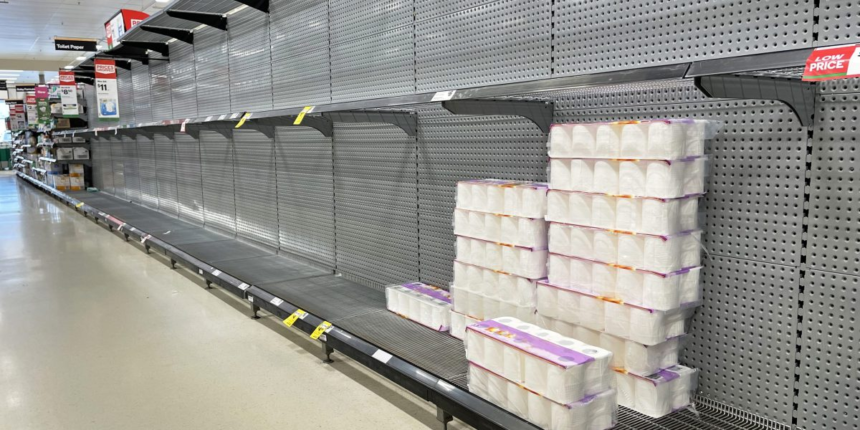
Panic buying is back in Japan.
But why would people panic buy goods unrelated to or not affected by the conflict? Panic buying behaves much like a bank run. Nobody knows exactly where it starts—some single, bleating data point that says this store is going to run out of toilet paper, or this bank is going to run out of money.
Back in the olden days that data point, a verifiable person, would run and holler at their neighbors; “Hey Johnny, take your money outta the bank! They’re about to run out!” and Johnny would go a-running. Now someone posts on social media that COVID-19, tariffs, or the war with Iran is going to nuke toilet paper stock, and strangers across the country start loading up their carts.
Now the panic buying is back—this time in Japan—and in some ways it makes even less sense. During COVID, supply chains across every sector were under strain, so the instinct to stockpile had, at least, a logical ambiance. Today, the disruptions are due to tightening in oil markets tied to the conflict in Iran, and little to do with consumer packaged goods. But Japan has its own deep history with toilet paper panic, and that history has its own logic.
What makes toilet paper the perennial target? It’s bulky and distinctly finite—when it’s gone from the shelf, it’s conspicuous. And unlike food, which you consume and replace in a rhythm, toilet paper occupies a kind of psychological category all its own, a symbol of long-term stability and responsibility.