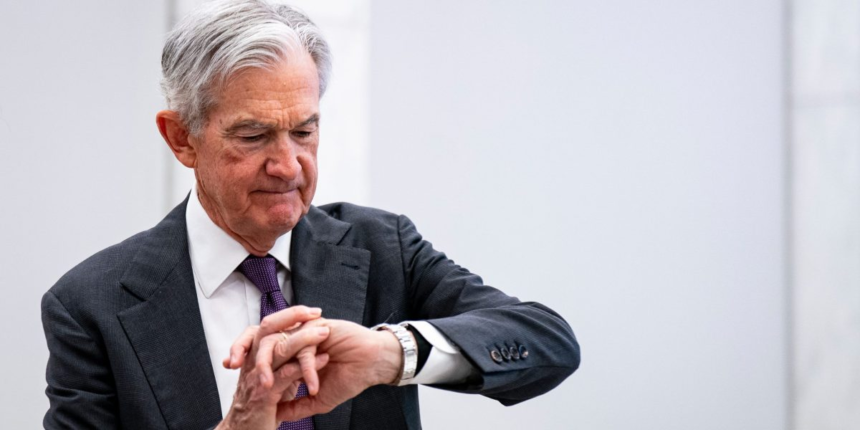
Wall Street is looking ahead to a highly anticipated meeting of Federal Reserve policymakers, who are widely expected to lower interest rates for the first time this year amid relentless pressure from the White House and deteriorating employment data.
The rate announcement will also be accompanied by a so-called “dot plot” of fresh forecasts on rates, inflation and GDP growth from Fed officials. Chairman Jerome Powell will hold a press briefing soon afterward.
While there is little doubt about the outcome of the Fed meeting, there are still questions over who exactly will be voting—setting up some very awkward dynamics.
Senate Republicans hope to confirm Stephen Miran as a Fed governor on Monday so that he can participate when the meeting starts on Tuesday.
His decision not to resign from his White House economic adviser role while he serves on the Fed board and instead take a leave of absence is unprecedented, with critics saying it leaves him too vulnerable to pressure from President Donald Trump—who is already trying to fire Fed Governor Lisa Cook.
Miran has also previously criticized the Fed’s consensus-based approach and accused it of “groupthink.” Before joining the administration, he proposed reforms that would weaken Fed independence and argued that monetary policy would be better served with some arguments.
Will he tear into his new coworkers on his very first day?
Either way, get ready for more contested votes rather than the typical unanimous decisions. In a note on Friday, JPMorgan chief U.S. economist Michael Feroli said he expects the upcoming meeting to feature two or three dissents for a larger cut.
At the Fed’s last meeting Fed governors Christopher Waller and Michelle Bowman broke from other policymakers by calling for a quarter-point cut. It’s possible they could dissent again by voting for a half-point cut, Feroli said, with Miran expected to “dutifully dissent for a larger cut” as well.
The other question mark is whether Cook will be at the FOMC meeting. After Trump took the unprecedented step of firing her, claiming mortgage fraud, she sued to stay in her post. Cook denied the accusations and said Trump’s attempt to oust her is illegal.
In addition to Trump, Cook’s lawsuit also named the Fed’s board of governors, including Powell, as defendants. While her Fed colleagues weren’t involved in her dismissal, Powell was named in the suit “to the extent that he has any ability to take any action to effectuate President Trump’s purported termination of Governor Cook.”
“The era of Fed independence would be over. The risks to the nation’s economy could be dire,” the filing said.
If Cook is cleared to take part in the FOMC meeting, it may be awkward to discuss monetary policy with people she is also suing. But as central bankers prioritizing the Fed’s dual mandate, they are likely to consider it business and not personal.