A year after firing thousands of probationary employees, the Trump administration indicated it needs more early-career workers to sustain the federal workforce.
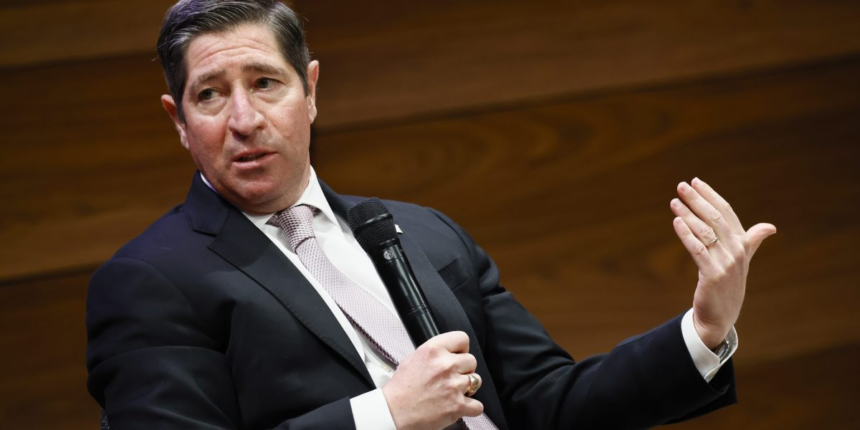
“We’ve got close to half of our population that’s within 10 years of retirement age,” Scott Kupor, director of the Office of Personnel Management (OPM), told Fortune. “So if you just did nothing else, you’ve got this major demographic challenge of a large number of people who will likely either retire or certainly be retirement-eligible over the near term, without us actually replenishing the pipeline of early-career people coming in.”
Early-career individuals—those with five to seven years of experience—make up only about 7% of the 2 million civilian federal workforce, compared to more than 20% of the broader U.S. workforce, he said.
The hiring spree is a departure from the Trump administration’s early efforts to reduce the federal workforce, particularly entry-level employees. In the first days of his second term, President Donald Trump tapped Elon Musk to spearhead the Department of Government Efficiency (DOGE) to slash contracts and cull headcounts, with the initial goal of cutting $2 trillion from the federal budget.
Kupor said he sees the cuts and hirings as part of the same mission: “We’re reshaping the workforce to make sure that we have the right talent for the right roles.”
“A huge push is around technology, for example,” he added. “That’s an area where we don’t have all the skills we need to do the modernization efforts that we’d like.”
That came after DOGE’s gutting last year of the U.S. Digital Corps and the General Services Administration’s 18F program meant to improve the government’s technological efficiency.
“We need people with modern software development. We need people with modern AI understanding. We need data science,” he said.
But many federal workers see the transformed government workforce differently, with some saying the headcount cuts have made it harder for existing employees to complete their jobs efficiently.
An anonymous OPM employee not authorized to speak to the press told Fortune a handful of employees admitted to answering pulse survey responses more positively than they really felt, expressing concerns around lack of trust and that their responses were being surveilled. The employee said other employees didn’t complete the survey because of methodological limitations, such as no questions with open-ended responses.
Kupor said he understands not all employees will be on board with the mission of the administration.
“There’s no question that when you do the changes in the order of magnitude, we’re doing it fully understandable that there are some people who are not fully bought off on those changes,” he said.