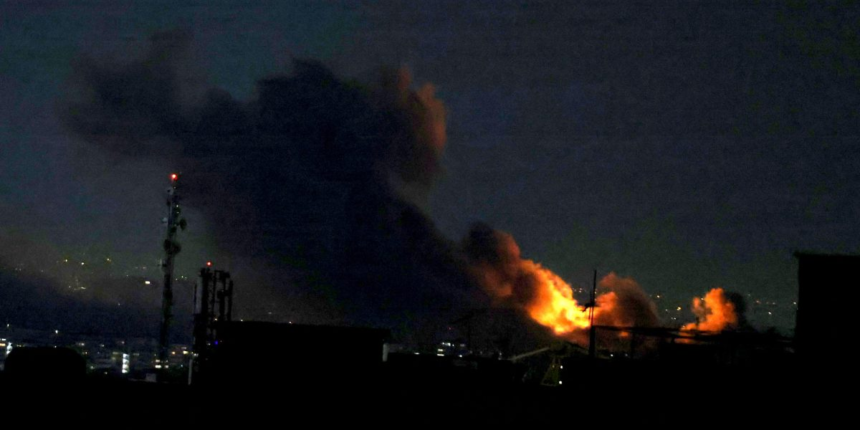
Parts of Tehran lost electrical power after missile strikes on Sunday as Iran and its proxies lobbed attacks at US allies over the weekend and thousands more American military personnel moved into the region.
The arrival of a US amphibious assault group and the introduction of the Iran-backed Houthis to the conflict raised fears of a possible escalation of the war entering its second month, even as Pakistan, Egypt, Saudi Arabia and Turkey met to find a path out.
There’s still little sign that Iran and the US will meet for peace talks soon, even though President Donald Trump has pushed for negotiations as US gas prices soar in a congressional election year. He delayed his deadline to April 6 for Tehran to agree to reopen the Strait of Hormuz or have its power plants demolished. Iran rejected a 15-point proposal from Trump and insisted on war reparations and other demands Trump is unlikely to accept.
Electricity supply was cut in parts of Tehran, the capital of Iran, and nearby Alborz province after attacks on facilities in the area, the state-run Islamic Republic News Agency reported Sunday. It was largely restored within an hour.
The International Atomic Energy Agency concluded Sunday that Iran’s Khondab heavy water production plant had sustained severe damage from a strike. Heavy water is used in nuclear power plants as well as for weapons-grade plutonium. One of the stated aims for the war is to destroy Iran’s nuclear capabilities.
Iranian Supreme Leader Mojtaba Khamenei issued remarks for the first time in about a week on Saturday, thanking Iraqi religious authorities for their support, according to state-run Hamshahri newspaper. Khamenei, who took over when his father, Ayatollah Ali Khamenei, was killed during the initial hours of the war, still hasn’t been seen in public since his appointment and the US says he’s injured, perhaps badly.
The Washington Post reported that the US Defense Department was preparing for potentially weeks of ground operations in Iran, citing unidentified US officials. Any mission would likely first focus on opening the Strait of Hormuz, the strategic waterway through which a fifth of seaborne global oil flowed before the war but which has now slowed to a trickle, inflicting the biggest supply disruption in the history of the global oil market.
“Our men are waiting for American soldiers to enter on the ground,” Iranian Parliament Speaker Mohammad Bagher Ghalibaf said, according to the semi-official Tasnim news agency.
The strait has emerged as Iran’s main source of leverage in the war and Tehran is drafting a law to govern passage through the waterway. It will include sections related to shipping security, the collection of fees and the establishment of a “regional development and progress fund,” the semi-official Fars news agency cited lawmaker Alireza Salimi as saying on Sunday.
One person was killed in an Iranian strike on Tel Aviv, according to Israel’s emergency services. Israel’s invasion of southern Lebanon continued over the weekend, with strikes killing two journalists on Saturday, according to Lebanon’s state-run NNA.
The US military said in a social media post on Saturday that it had struck more than 11,000 targets and destroyed more than 150 Iranian vessels since the conflict began. The Israel Defense Forces said a wide-scale wave of strikes overnight targeting missile production and storage sites in Tehran had been completed.
The war has left over 4,500 people dead, according to governments and non-governmental agencies. Around three-quarters of fatalities have been in Iran, while more than 1,200 people have died in Lebanon. Dozens of people have been killed in Israel and Gulf Arab states, and 13 US troops have died.