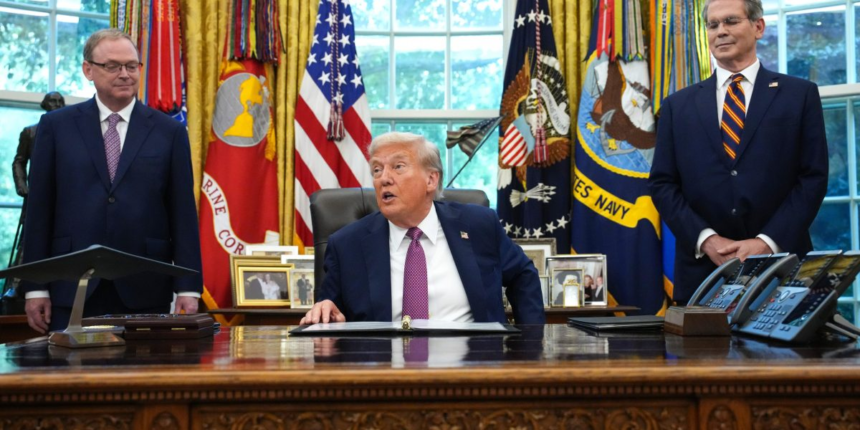
Hassett added that he’s not only bullish about growth in the economy but “the fact that we have tariff revenue and we’ve got a lot more spending restraint than was here in the past.” He noted tariffs are an important part of Trump’s economic policy and that “a lot of the revenue coming into the Treasury” is from tariffs. Hassett cast tariffs as part of a broader supply-side strategy he said he believes can boost growth, widen the tax base, and, over time, ease the debt burden.
Bessent defended the tariff regime in his interview with the New York Times’ Andrew Ross Sorkin, saying tariffs are currently bringing in substantial revenue, and they are “good for labor.” He stressed the ultimate goal is to rebalance trade and rebuild domestic manufacturing, not to fund government permanently.
The remarks from Bessent and Hassett come as the Supreme Court weighs whether Trump overstepped by using the 1977 International Emergency Economic Powers Act to impose tariffs far beyond past presidents’ use of the law. Bessent said on Wednesday if the Supreme Court succeeds in throwing out many of the tariffs, it would be “a loss for the administration” and “a loss for the American people.”
Regarding the Supreme Court, Hassett said the use of an economic emergency law was justified by the social damage from decades of large trade deficits and diminished well-being for American labor, as evidenced by “deaths of despair,” often fentanyl-related. Hassett said the administration is confident the Supreme Court will uphold Trump’s use of emergency powers to levy import charges. He also rejected the idea tariffs are inherently inflationary, calling them a one-time price shock rather than a persistent driver of rising prices, something that was echoed in Bessent’s interview with Ross Sorkin.