The flip side of all that buying is plenty of selling as investors need to raise cash for stock purchases by liquidating other shares in their portfolios.
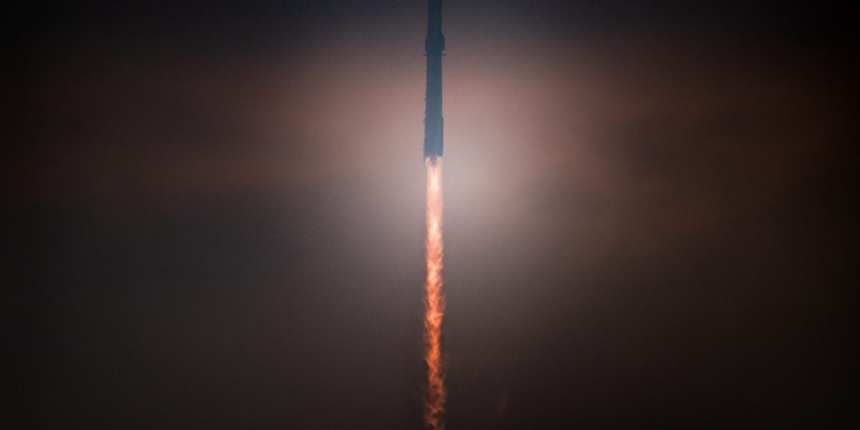
SpaceX plans to raise at least $75 billion in its IPO by selling over 555 million shares at $135 a piece, valuing the company at more than $1.75 trillion. If underwriters exercise options for additional allotments to meet high demand, proceeds could grow to $85.7 billion.
“We think many of the standalone SpaceX flows might be digestible. The problem is that many of these flows are potentially same-way and additive,” Boutle explained. “With the SpaceX free float reported to be close to $75bn on IPO, it’s easy to see how $30bn of passive buying, a retail investor chase, and levered ETF and option flows collectively could quickly become challenging for the stock’s liquidity. If all are chasing to buy (or sell) at the same time, the risk of price dislocation becomes much greater.”
Such buying will be funded with equivalent selling. But Boutle noted retail investors could be more important for SpaceX and the IPO’s market impact than passive flows. That’s because they have behaved in “a FOMO-style, rally-chasing manner” so far this year.
“This type of herd behavior tends to amplify moves and create fatter tails,” he added. “This would then be amplified by passive investment demand.”
Retail investors could have much of their wealth tied up in other stocks, and the astronomical surge of AI-related companies in recent years makes them ripe as sources of cash.
“Selling flows in recent winners and levered products from retail to invest in SpaceX could be very large,” he predicted.
Boutle estimated that retail and passive investors might sell a combined $50 billion of other stocks to raise funds for buying SpaceX. And if the IPO performs well, that figure could rise. A further cascading effect is possible if levered ETFs and commodity trading advisors join in, as mechanical rebalancing is triggered.
On top of that, the SpaceX IPO is happening near the end of the second quarter, when more than $100 billion of stock sales unrelated to the IPO were already expected, according to Boutle.
“The danger for the market is not the individual flows, but the cumulative effect,” he warned.
As much as the SpaceX IPO could be a bumpy ride for Wall Street, it’s just the beginning. OpenAI and Anthropic also plan to go public this year, and demand for the top AI companies will likely be high as well.
The IPOs of the leading AI companies also mean investors who have been holding shares in adjacent companies in the hope of riding the AI boom indirectly no longer need them anymore.