It was hard to read a news story covering the Gulf last week that didn’t contain the word ‘Space X’—with good reason.
Tipped to become the largest stock market debut in history, SpaceX is targeting a valuation of nearly $1.77 trillion in its blockbuster initial public offering (IPO) by selling 555.6 million shares at a fixed price of $135 each. Gulf sovereign wealth funds and prominent investors are set to be among the biggest beneficiaries.
The multi-billion-dollar windfalls they are poised to receive will offer a nicely-timed boost to their balance sheets, which have not enjoyed the usual flow of petrodollars since the outbreak of the Iran war.
Zooming out, it marks a significant moment in validating their investment strategies, with the Gulf states ranking among some of the earliest investors in Elon Musk’s SpaceX and xAI—the two companies merged in early February to become a rocket business, satellite internet provider and AI company.
If SpaceX debuts successfully at its expected valuation, it would be one of the clearest examples of Gulf capital backing a transformational technology platform before public markets fully recognized its value.
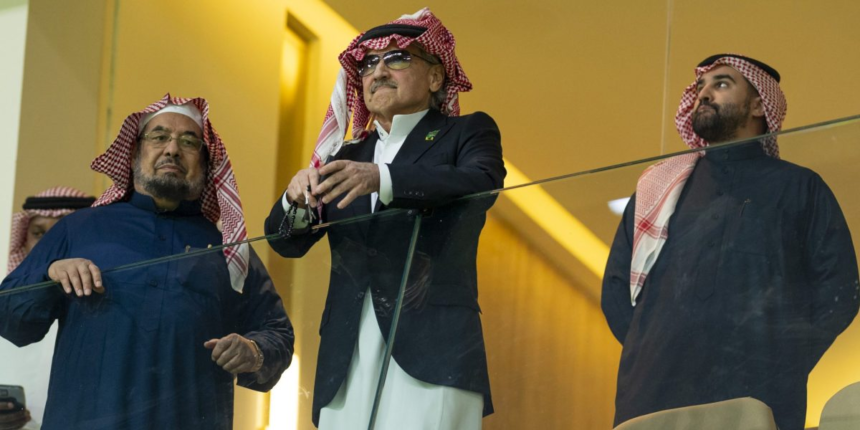
Saudi Arabia’s Prince Alwaleed bin Talal—aka the “Warren Buffett of Arabia”—owns a 0.63% stake in SpaceX that could be worth around $10.6 billion if the IPO achieves its expected $1.77 trillion valuation.
Meanwhile, a cluster of high-profile Gulf sovereign wealth funds have exposure to SpaceX through both direct and indirect investments.
While their stakes fall below reporting thresholds, the IPO should crystallize enormous paper gains for all of them.
But, for Gulf investors, the listing is not just about financial returns.
The company claims that solar panels and laser optical communication in space can produce energy eight times more efficiently than ground-based systems—generating a total of 100 GW of power, equivalent to roughly 100 nuclear power plants.
While the prospectus acknowledges the technology is in its infancy, the plans align with the Gulf’s broader strategic ambitions of building out their digital and communications infrastructure.
Meanwhile, in early March, the Gulf’s cloud infrastructure was compromised when two Amazon Web Services (AWS) data centers in the UAE and one in Bahrain sustained direct hits from Iranian drones or damage from nearby debris.
Starlink already serves as an invaluable backup network for critical industries during disruptions and regional cloud outages. Given Musk’s continued efforts to build out a resilient communications infrastructure, for the Gulf, backing SpaceX’s satellite network is as much a strategic maneuver as it is a commercial tech investment.