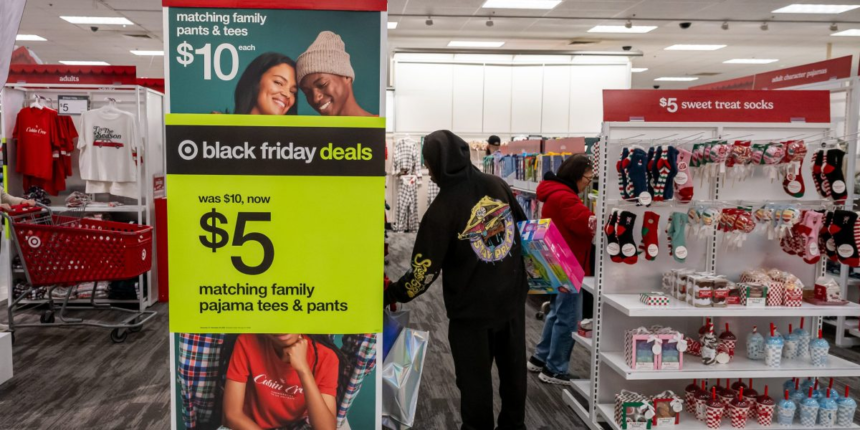
Underwhelmed and unimpressed are how shoppers are feeling about Black Friday deals so far.
The Repasky family makes a tradition of coming out to Tysons Corner Center shopping mall in Virginia on Black Friday. One change they noticed this year: fewer doorbuster deals and freebies.
Jennifer Schmuck reported the same from Westfield Montgomery Mall in Maryland Friday morning. “I don’t think the deals were as good,” the 50-year-old banker said. Last year Macy’s Inc. gave her a $10 coupon for being among the first in line, but didn’t this year.
One Polo sweater she was eyeing went from $125 last year to $170 this year. “It’s a big change,” she said. Ritzius didn’t end up buying it.
“It feels like less than a normal Saturday,” said Nicole Slaughter from the Mall of Georgia in the Atlanta area.
Signs point to a less indulgent holiday season.
“We are not expecting it to be an overzealous, exciting holiday,” said Marshal Cohen, chief retail adviser at research firm Circana.
While overall spending is estimated to be on par with last year, according to Circana, unit sales could fall as much as 2.5%. In other words: People will spend more to buy less stuff.
“The tree is not going to be jammed this year,” Cohen said.
“Nothing is discounted enough that it moves the needle where I’m like, ‘oh I don’t need it, but I need to get it now,’” said Jennifer Greenberg, a 29-year-old who lives in New York City, while shopping for a menorah at Bloomingdale’s.
Still, the day won’t be entirely devoid of promotions.
Consumer spending has held relatively steady this year despite macroeconomic turbulence. Earlier in the year, some shoppers fueled sales with big ticket items they purchased to avoid impending tariffs. Since then, a buoyant stock market has kept people in the top income brackets spending. Many retailers have said that people’s purchasing habits remain consistent and that tariffs haven’t affected prices as much as initially expected.
Shoppers are likely to gravitate to items that could be hit by tariffs next year, said Jessica Ramírez, managing director at the Consumer Collective consulting firm. People are also purchasing things that bring them joy during an otherwise stressful time, she said. That includes keychains and other accessories to spruce up their handbags and home decor items to brighten up their living space.