The Kremlin offered more indications that it’s acknowledging Russia’s economy is in trouble after years of relying on military spending for growth.
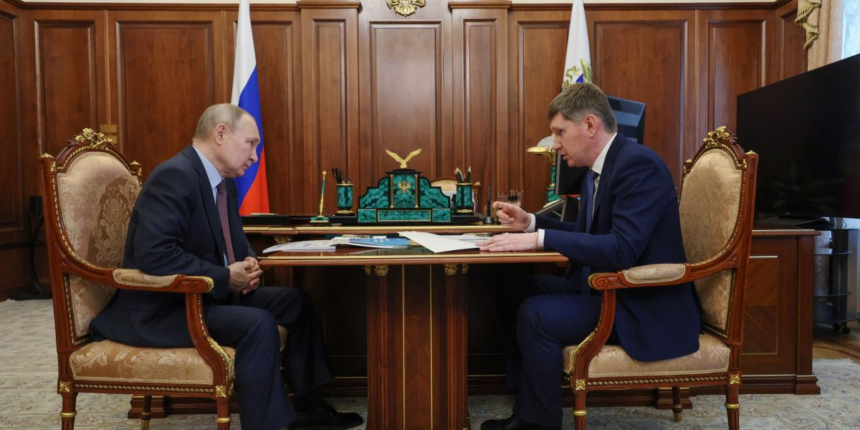
“Of course, it’s not easy to find staff, and salaries are rising,” he said. “But nonetheless, we coped with all of that somehow because somewhere in the economy there were reserves. Our current records show that these reserves have largely been used up; this truly is the situation and the macroeconomic situation is substantially more difficult.”
Reshetnikov added that ruble has appreciated more than he would prefer and that interest rates are still too despite a series of rate cuts from the central bank.
Businesses will have to figure out how to mange costs and spending while also boosting productivity, he said, citing advances in artificial intelligence.
On Friday, the central bank slashed the benchmark interest rate again, marking the fifth straight half-point reduction, to bring it down to 14.5%.
“A significant risk from external conditions is the situation in the Middle East,” Governor Elvira Nabiullina said at a briefing. “If the conflict drags on, the negative effects on the Russian economy will grow.”
The latest cut came a week after Russian President Vladimir Putin made his concerns about the economy public as he vented frustration at ministers and demanded they offer solutions.
“I expect to hear detailed reports today on the current economic situation and why the trajectory of macroeconomic indicators is currently below expectations,” Putin said. “Moreover, below the expectations of not only experts and analysts, but also the forecasts of the government itself and the central bank of Russia.”
The scolding follows a series of warnings over the past year that Russian officials and Kremlin allies in the private sector have raised.
The situation has grown so dire that a veteran lawmaker in Russia said that people could rise up and stage a revolution like the Bolsheviks did in 1917.
“If you (the government) do not urgently adopt financial, economic and other measures, by autumn a repeat of what happened in 1917 awaits us,” he said. “We don’t have the right to repeat that. Let’s take some decisions.”
To be sure, there are no signs of a popular uprising. But the Kremlin has recently cracked down on internet access recently as Russia suffers heavy casualties in Ukraine while inflation prompts consumers to complain about the cost of living.
“They still have a systemic problem,” Thomas Nilsson said. “It’s not a sustainable growth model to produce material for the war that is then destroyed on the battlefield.”
Meanwhile, Ukraine’s advances in drone technology have also enabled it to strike deep into Russian territory, targeting oil infrastructure to prevent Moscow from fully exploiting the spike in crude prices and cut off fuel supplies for Putin’s military.