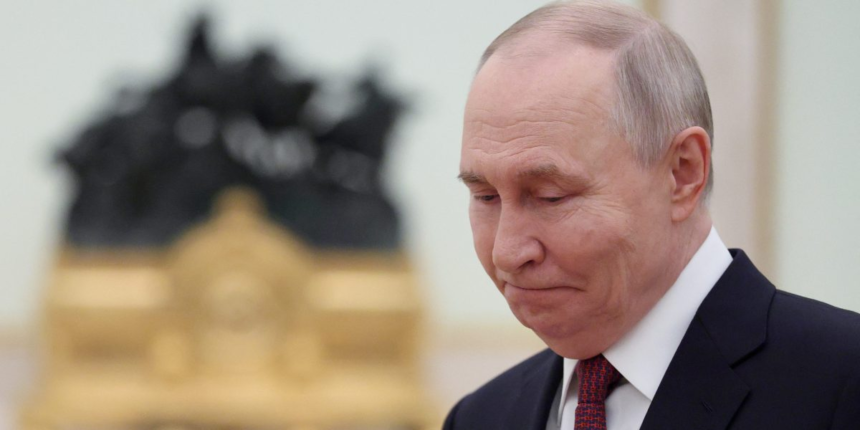
The Kremlin’s financial situation is becoming increasingly dire and could come to a head in a matter of months as oil revenue shrinks while President Vladimir Putin shows no intention of ending his war on Ukraine.
A Moscow business executive also told the Post that the crisis could arrive in “three or four months” amid spiraling inflation, adding that restaurants have been closing and thousands of workers are getting laid off.
The economic strains go back to Russia’s invasion of Ukraine four years ago. As sanctions took hold and Putin mobilized the economy for a prolonged war, a tight labor market and high inflation forced the central bank to keep interest rates high. Recent easing has failed to prevent spending declines in several consumer categories.
In June, Russian banks raised red flags on a potential debt crisis as high interest rates weigh on borrowers’ ability to pay off loans. Also that month, the head of the Russian Union of Industrialists and Entrepreneurs warned many companies were in “a pre-default situation.”
The Center for Macroeconomic Analysis and Short-Term Forecasting, a state-backed Russian think tank, said in December the country could face a banking crisis by October if loan troubles worsen and depositors pull out their funds, according to the Post.
“The situation in the Russian economy has deteriorated markedly,” wrote Dmitry Belousov, head of the think tank, in a note seen by the Financial Times. “The economy has entered the brink of stagflation for the first time since early 2023.”
The West’s tighter sanctions regime has forced Russia to offer steeper discounts on its crude exports, while the recent slide in global oil prices has already hurt its top revenue generator.
Despite the worsening fiscal outlook, Moscow is still spending heavily on weapons and incentives to lure fresh recruits to the army. To cover revenue shortfalls, Russia has tapped its sovereign wealth fund, but that is running out now too.
Russia has also suffered staggering losses on the battlefield, with an estimated 1.2 million killed or wounded since the war began. Last month, NATO Secretary General Mark Rutte said more than 30,000 Russian troops died in December alone—an average of 1,000 each day—to gain only minimal territory.
At the same time, European officials have pointed out that Russia is losing strategically, with Ukraine likely headed for EU membership, NATO growing larger after adding new member states, and Europe ramping up defense spending significantly.
Russian, Ukrainian and U.S. officials just ended two days of talks in Abu Dhabi with little progress reported. In comments released on Saturday, Ukrainian President Volodymyr Zelensky said the U.S. wants the war to end by June and plans a fresh round of negotiations.
“America proposed for the first time that the two negotiating teams—Ukraine and Russia—meet in the United States of America, probably in Miami, in a week. We confirmed our participation,” he said.