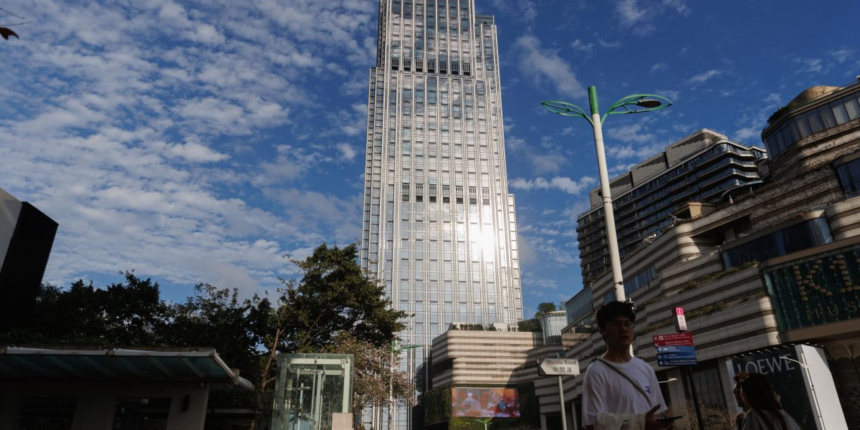
Earlier this year, Rosewood Hotel Group, the luxury hotel chain owned by Hong Kong’s billionaire Cheng family, introduced a parental leave policy offering 16 weeks of fully paid leave to all employees, regardless of gender or seniority; employees still qualify if they adopt. The policy applies to associates across corporate offices and managed properties globally.
“By rolling this policy out, it’s going to have an impact on our culture and our talent, and it’s going to drive business resilience in the long-term,” says Keno Lung, Rosewood Hotel Group’s global senior vice president for talent and culture. “It’s not so much because it’s the right thing to do, even though it absolutely is.”
Rosewood, founded in Dallas in 1979, is now part of the Cheng family’s business empire. Sonia Cheng, daughter of family patriarch Henry Cheng, serves as Rosewood’s CEO, as well as the vice chairman and executive director of jewelry chain Chow Tai Fook Jewellery.
Today, the group operates across 26 markets. Its most recent opening was in Courchevel in the French Alps in December 2025; new projects are under construction in Saudi Arabia, Seoul, and Shanghai. Rosewood Hong Kong, meanwhile, was ranked the No. 1 hotel by The World’s 50 Best Hotels in 2025.
“People aren’t looking at brand prestige, or the opportunities they get at a company,” Lung says. “They’re actually thinking: ‘Hey, do I align with the values of this company’ and ‘What’s the purpose of this organization?’” (He himself admits to leaving organizations that gave unsatisfying answers to these questions.)
Because Rosewood’s parental leave policy applies in every market, Lung admits “there was a lot of complexity” as the company rolled out the policy. “You’re looking at different jurisdictions with different statutory requirements, around payment frameworks, around eligibility, around legalities of recognizing parenthood,” he said. “Even if it’s not written in the law, a lot of existing cultural nuances are tied to gender roles around parental responsibilities.”
Generous leave policies frequently go underused, particularly by men, if workplace culture quietly penalizes those who take advantage of them.
“If you design something purely around maternity leave, which is what a lot of statutory frameworks focus on, then you place a disproportionate amount of pressure on women,” Lung says. “By making this gender neutral, we’re signaling that mothers, fathers and non-birth partners are treated equally, and remove the stigma from taking leave.”
Still, Rosewood isn’t quite going the extra step of forcing parents to take time off. “We don’t mandate that you must take leave, but we mandate that you’re given the option,” he says. The company will track return-to-work rates, engagement survey results, and long-term career progression among parents to measure whether the policy translates into practice.
Rosewood has also established employee resource groups, including one dedicated to parents and caregivers, to support reintegration once employees return. “We work with leadership so that they really remove the notion that caregiving as a parent is a distraction or disruptor to a career,” Lung says.
Correction, May 25, 2026: An earlier version of this article misstated Sonia Cheng’s position at Chow Tai Fook Jewellery.