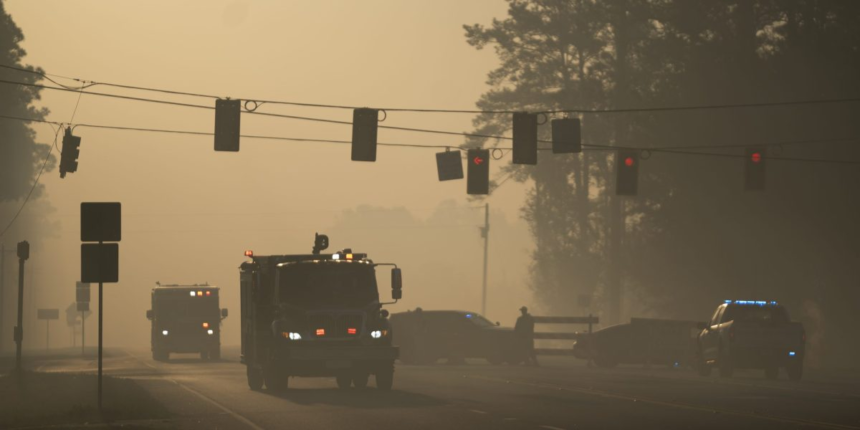
Earlier this month, a balloon coated in aluminum foil—the kind normally seen at a child’s birthday party—drifted into the path of a transmission line, kindling an electrical spark that ignited dry vegetation nearby. Around the same time, a stray flicker from a welding tool landed on an equally parched forest floor several dozen miles away.
A combination of drought, dense vegetation in vulnerable states, and the effects of climate change has brought on an unseasonably ferocious wildfire season to parts of the U.S., said Timothy Ingalsbee, a wildland fire ecologist and executive director of the non-profit Firefighters United for Safety, Ethics, and Ecology. With the country’s firefighting services already strained, the devastation so far could be a prelude to an unusually intense summer as fires migrate west.
“We’re seeing a rapid increase in wildfire activity,” Ingalsbee told Fortune. “Wildfire has typically been perceived as just a western problem, but with climate change, it’s not just coast-to-coast. It’s global.”
It’s normal for wildfires to start earlier in the year out east before they appear in western states, Ingalsbee said. Ignition is more likely in spring in states like Florida and Georgia, before summer rains arrive to snuff out any flames. In places like California, meanwhile, hot, dry winds during the summer raise wildfire risk.
That combination of dry weather and ample fuel has turned much of the country into a powder keg waiting to catch fire, particularly in central states dominated by grasslands, according to Carly Phillips, a researcher and ecosystems scientist at the Union of Concerned Scientists.
“Grasses can ignite so easily when they are dry enough. That’s the reason you use them as the base of your campfire,” Phillips told Fortune. “When the fire weather is so extreme, with low humidity and high wind speeds and that kind of thing, that just allows fire to spread very quickly.”
The final piece of the puzzle is the rise in temperatures due to climate change. A critical metric in evaluating wildfire risk is the so-called vapor pressure deficit, or the “thirstiness of the atmosphere,” according to Phillips. It’s the difference between how much water vapor the atmosphere can hold and how much is actually in the air.
While most fires so far this year have been concentrated east of the Rockies, the West is preparing for a similarly intense wildfire season once summer rolls around.
“Snowpack is a key part of the western U.S. wildfire story,” Phillips said. “We know that with lower snowpack and less moisture in these ecosystems, they are certainly more primed for wildfire should an ignition occur.”
Lack of snow in the West removes one of the region’s only natural buffers against severe wildfires, limiting fire prevention options and potentially leaving more work for firefighting forces. But as the U.S. gears up for a potentially historic fire season, concerns linger over the capabilities of agencies tasked with managing fires.
“By August, fire crews are burned out, beat up, and banged up from constant mobilization, and so you’re expending all their energy early in the season on fires that don’t really require full suppression,” Ingalsbee said. “It’s a waste of their effort.”
The massive reorganization of the country’s federal firefighting strategy comes as dry and hot conditions have turned the country into a tinderbox. With these climate and weather patterns likely to become even more frequent, the restructuring will quickly be put to the test.
“This could be a historic wildfire year,” Ingalsbee said. “I don’t think people can count on Uncle Sam’s firefighting army coming to their defense. They’re going to have to prepare for fires on their own.”