The Kremlin’s war machine is short on money and fuel as Ukrainian drones wreak havoc on Russian supply lines.
More than four years after Vladimir Putin failed to seize all of Ukraine in a full-scale invasion, analysts say Kyiv’s forces have turned the tide with improved drones and tactics.
At the same time, Russia is reeling as casualties reach staggering heights, recruitment of replacement troops wanes, and areas far from the frontlines come under attack.
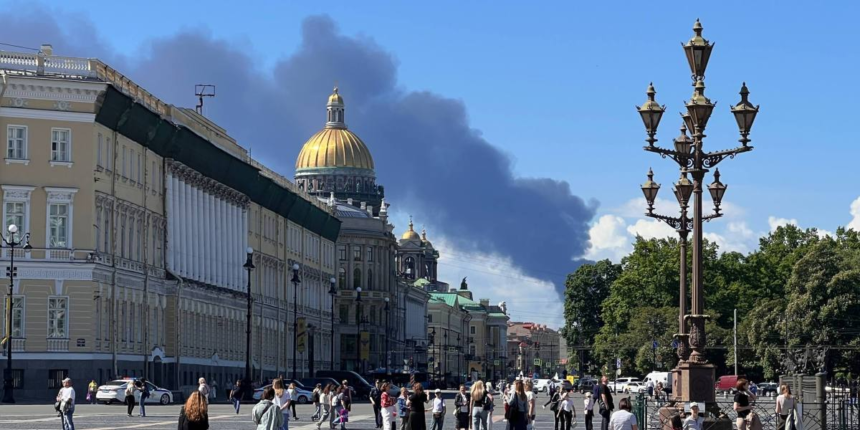
Russia’s changing fortunes were exemplified earlier this week at the St. Petersburg International Economic Forum, which kicked off just as long-range Ukrainian drones damaged a nearby refinery and naval shipyard, sending plumes of smoke over Putin’s attempt to create his own version of the Davos gathering.
Defense spending could send the government’s budget deficit into dangerous territory, the report said, noting that the shortfall through April had already deepened to 5.9 trillion rubles, or about 50% above the forecast for the entire year.
While Russia has been recording deficits for four years, a wider gap would further drain its reserve fund, which is now down 60% from prewar levels.
In addition, the economy has since reversed after growing on the back of military spending. GDP contracted in the first quarter, and the Kremlin now sees just a 0.4% uptick for all of 2026, down from a previous view for 1.3% growth.
But Ukraine has also been attacking Russia’s oil infrastructure this year, targeting export terminals, refineries, and trucks carrying supplies in occupied areas of Ukraine.
Fuel supplies are now being rationed in Moscow and parts of northern Russia, as almost all major oil refineries in central Russia have reportedly halted or scaled back output.
Meanwhile, Russian-occupied Crimea has basically run dry amid a steady barrage of drone attacks on trucks along key highways linking the Ukrainian peninsula to Russia.
The supply chain to occupied provinces in southern and eastern Ukraine is also cracking, and authorities have started to restrict gasoline sales in Luhansk and Kherson.
The long-range strikes on refineries are reducing Russia’s fuel output, while the mid-range strikes on the highways are hurting its ability to transport the gasoline that’s still being refined.
Fuel shortages hit the civilian sector as well as the war effort. The Russian military’s motorcycles, all-terrain vehicles, and trucks run on gasoline, while armored vehicles, heavy trucks, and generators use diesel, ISW pointed out.
“The gasoline shortages in occupied Ukraine are likely having a limited effect on the Russian military for the time being,” analysts wrote on Thursday. “More militarily consequential diesel shortages are beginning to materialize, but the Kremlin may try to limit them with an export ban.”