Bacteria often get a bad rap as germs that cause sickness. But some bacteria and yeasts provide you with a health boon instead of a bane. The goal is to keep the scales tipped in favor of these “good” bacteria.
To do that, you need a diet rich in both probiotics and prebiotics. Here’s why.
Probiotics are good bacteria. They’re live microorganisms (bacteria and yeasts) that naturally live in your body and have a positive effect on health. But you can also get them from certain foods and supplements.
“They’re like the fuel,” says Amy Bragagnini, RD, national spokesperson for the Academy of Nutrition and Dietetics. “It’s basically a fiber that is able to resist the acidity of the GI tract. It doesn’t break down as it goes through your system, and feeds the healthy microbes in our microbiome.”
Bragagnini says that even though comparatively, probiotics do the lion’s share of the work of good digestion, prebiotics are the sustenance that make it last.
“Technically, you could probably get away with just having probiotics, and you would see some benefit,” she says. “However, to make a lasting, sustainable microbiome, you need a balance of both.”
Good bacteria help prevent the overgrowth of pathogens that can trigger inflammation in your body. When your bacteria balance is off, it means you have fewer of the bacteria that help you metabolize specific nutrients and absorb vitamins and minerals. With enough good bacteria, you digest foods easily and regularly, and get optimum nutrition from the foods you eat.
“If you suddenly start having a lot of uncontrolled diarrhea or incredible amounts of gas, bloating, and discomfort and you aren’t really sure what’s causing it, it could be a sign that you’re a little bit low in probiotics,” says Bragagnini.
Although there are certainly plenty of supplements and products that tout a probiotic boost, your best best is to increase both your probiotic and prebiotic levels through the foods you eat.
“It’s absolutely best to get it straight from foods,” says Meg Harrell, RN, a nurse educator in Sanford, Florida. “Some products will add a little bit of live microorganisms and be able to advertise as containing probiotics, but you don’t know exactly how much, so getting it straight from the foods is the best way.”
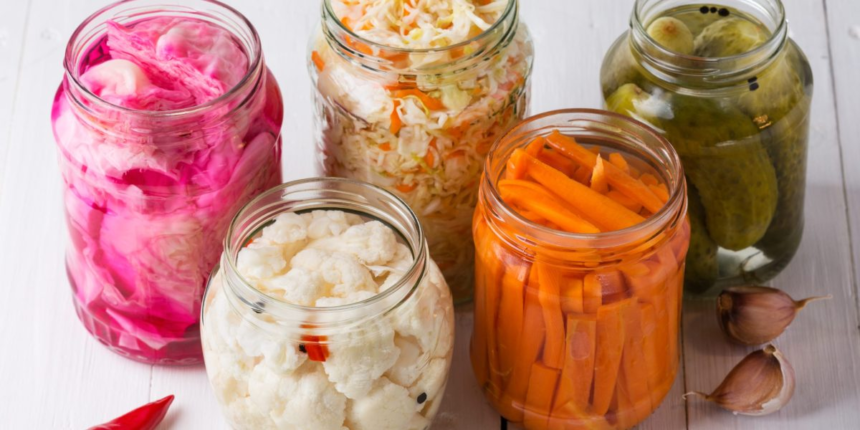
When you think of probiotics, think of fermented foods like yogurt and sauerkraut, Harrell says. Other options include tempeh, kefir, miso, kombucha, and kimchi.
“You’re looking for whole grains, bananas, green leafy vegetables, soybeans, and onions,” says Harrell.
“Supplements aren’t regulated by the Food and Drug Administration, so it just lets the consumer know that the company itself went through another step of making sure they have quality in their product,” she says.
Making a shift in your diet can feel intimidating, but Bragagnini says it can help to begin with a look at where you are before making small steps toward where you want to be.
“Ask yourself, ‘How many fruits and vegetables am I getting in my diet every single day?’” she says. “And if you find that you’re getting only one or two, maybe make your first step to aim for at least five or more servings a day.”
You can also talk to a registered dietitian to help you get started, especially if some of the foods you want to add into your diet are new to you, she says. And remember, you don’t have to overhaul everything all at once.
“Look up a good recipe and challenge yourself to try one new thing a week,” she says.