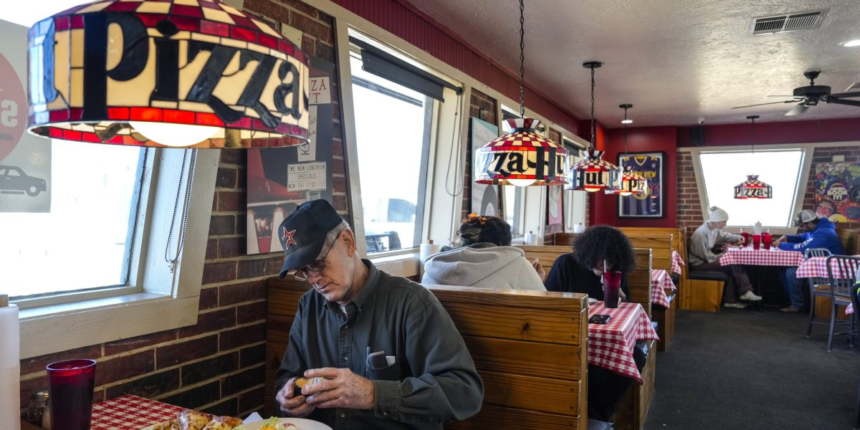
After years of being a struggling business and losing ground to competing chains, Pizza Hut’s fate will now rest with private equity.
With a private equity takeover, new ownership could either be a chance for the brand to recapture the hearts of nostalgic Americans, or a death knell.
“It’s anyone’s guess as to what private equity does,” Neil Saunders, managing director of GlobalData Retail, told Fortune. “Private equity can be a force for good. They can invest in the business—try and grow Pizza Hut, invest in the proposition, make restaurants more appealing—or they can go the other way, which is trying to monetize the brand and squeeze it.”
For some, private equity can be a saving grace: Firms can offer much-needed cash and guidance on how to scale or scale back operations. But they can also be a cash grab and a way to strip a business of assets with little concern for its future success.
Last year, Hooters cofounder and CEO Neil Kiefer bought back more than 100 locations of the chain from private equity, blaming previous ownership for turning what he first envisioned as a family-friendly beach restaurant to a more provocative concept.
Pizza Hut “just really faded in terms of relevance to the diner, and it wrapped them in a very, very difficult position,” Saunders said. “Whereas, of course, Domino’s was born as a takeout service, so it was on the right side of trends from the get-go.”
Leaning into the nostalgia is compelling, Saunders said, but it will take more than that to revive the company—otherwise Yum Brands would have already fixed the chain. Pizza Hut’s new ownership will instead have to look at its menu, locations, and investment in technology for answers.
“People kind of like that nostalgia in a curious way,” Saunders said. “I don’t think it’s powerful enough to override some of the inherent problems with Pizza Hut….nostalgia on its own, it just doesn’t cut the mustard.”